Bayahíbe rose: national flower of the Dominican Republic
Flor de Bayahíbe
Rosa de Bayahíbe · Pereskia quisqueyana · Leuenbergeria quisqueyana
Definition
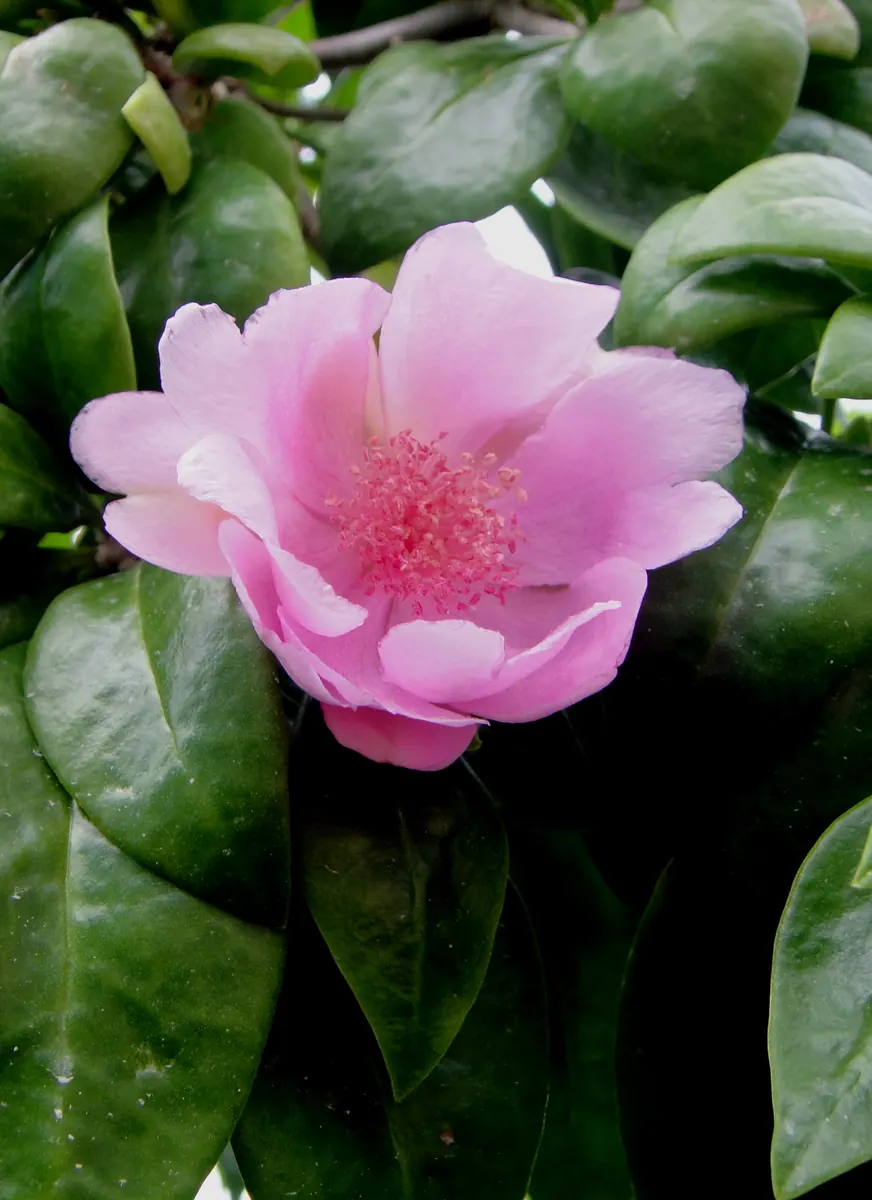
The Bayahíbe rose (Leuenbergeria quisqueyana) is an endemic Dominican cactus designated the national flower by Law 146-11 in 2011.
Explanation
Its former scientific name is Pereskia quisqueyana. Unlike the familiar image of a cactus, it has developed leaves and spiny branches. Its pink flowers resemble roses superficially, but the plant belongs to the cactus family, not the rose family.
Cultural Context
The same law designated mahogany as the national tree. The common name refers to Bayahíbe in the southeast, where the plant occurs naturally. The species highlights the importance of protecting native flora.
Identifying the plant
Green leaves and woody, spiny stems help distinguish it from leafless cacti. The flowers have pink petals and numerous stamens. Not every pink-flowered plant or leafy cactus belongs to this species.
Habitat and conservation
The species is associated with southeastern Dominican habitats. The National Botanical Garden carries out conservation and propagation work. Habitat loss threatens wild populations; cultivated specimens cannot replace protection of the original ecosystems.
Flower versus coastal destination
Its common name connects the plant with a coastal community. This article addresses the species, identification and symbolism rather than beaches, accommodation or itineraries. Observe specimens without cutting branches or collecting wild plants.
Frequently asked questions
Is it a true rose?
No, it belongs to Cactaceae.
When was it designated national flower?
In 2011 under Law 146-11.
What is its scientific name?
Leuenbergeria quisqueyana, formerly Pereskia quisqueyana.
Related terms
Uva de playa
Uva de playa is the Spanish name for seagrape (Coccoloba uvifera), a coastal plant with rounded leaves and edible fruit growing in grape-like clusters.
CultureCigua Palmera
The palmchat (Dulus dominicus), called cigua palmera in Spanish, is the Dominican national bird and a songbird endemic to Hispaniola and nearby islands.
CultureEscudo nacional
The national coat of arms of the Dominican Republic features an open Bible, a cross, flags and the motto Dios, Patria, Libertad.
CultureBandera nacional
The Dominican national flag consists of four blue and red quarters divided by a white cross, with the national coat of arms at the center of the official state version.
CultureFlamboyán
The flamboyán (Delonix regia), or royal poinciana, is an ornamental tree native to Madagascar, known for its spreading crown and red-orange flowers.