Flag of the Dominican Republic: history and meaning
Bandera nacional
Bandera de la República Dominicana · Bandera Nacional Dominicana
Definition
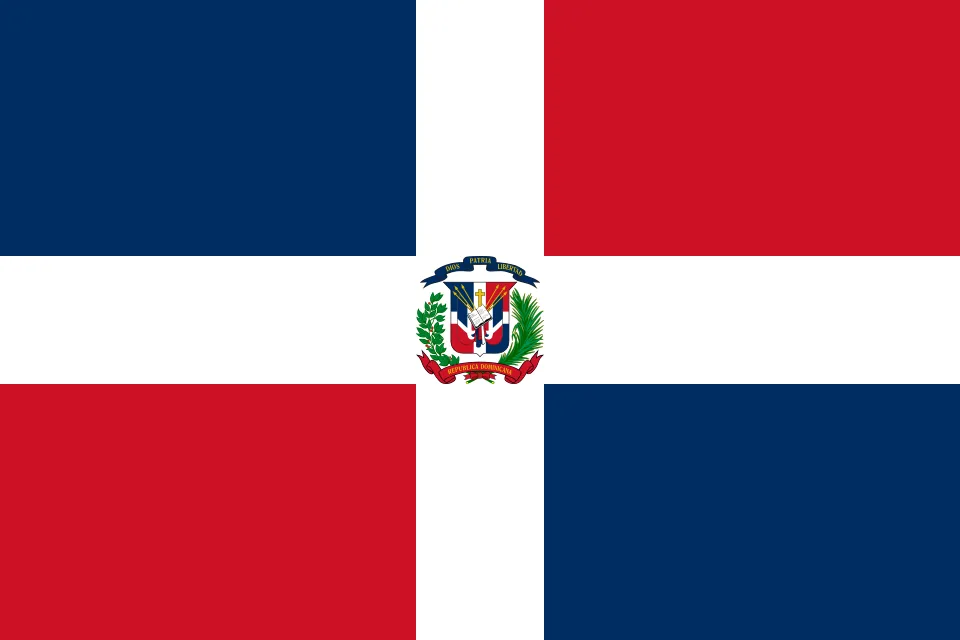
The Dominican national flag consists of four blue and red quarters divided by a white cross, with the national coat of arms at the center of the official state version.
Explanation
With the flagpole on the left, the upper-left quarter is blue and the upper-right red; the bottom colors are reversed. The white cross separates the four areas. Together with the coat of arms and anthem, the flag is a national symbol. It should not be confused with La Bandera Dominicana, the name of a traditional meal.
Cultural Context
The flag is associated with the independence movement and the establishment of the Republic in 1844. Juan Pablo Duarte formulated its design in the context of La Trinitaria, the secret society established in 1838. Its oath described a tricolor flag and a future coat of arms.
Independence and historical origins
February 27, 1844 marks Dominican independence from Haitian rule. The flag became associated with the establishment of the new state. Duarte, Francisco del Rosario Sánchez and Matías Ramón Mella are central figures in civic remembrance of this process. The initial design evolved toward the current arrangement.
Meaning of the colors
Common civic interpretations associate blue with freedom, red with the sacrifices of those who fought for independence, and white with peace and unity. Symbolic formulations can vary among institutions and periods; they should be distinguished from the legally prescribed geometry of the flag.
The national coat of arms
The emblem contains the national colors, an open Bible, a cross and other heraldic elements. Its upper ribbon carries the motto Dios, Patria, Libertad (God, Fatherland, Liberty); the lower ribbon names the Dominican Republic. A civil version of the flag omits the central coat of arms.
The flag in everyday life
It appears at public buildings, schools, civic celebrations and sporting events. February commemorations and Independence Day are particularly important. Official usage follows flag protocol; not every red, white and blue decoration is an official flag.
Flag versus national meal
La Bandera Dominicana also names a typical meal of rice, beans and meat, with variable accompaniments. That culinary name reflects its national and everyday character. This article addresses the state symbol, not the dish.
Frequently asked questions
What are the flag colors?
Blue, red and white.
Who conceived the design?
Juan Pablo Duarte described it in the oath of La Trinitaria.
Does the civil flag have a coat of arms?
No. The civil version omits the central emblem.
Related terms
La Bandera Dominicana
La Bandera Dominicana is the quintessential Dominican lunch, made up of white rice, stewed beans, and braised meat, typically rounded out with a salad or plantains.
CultureDuarte, Juan Pablo
Juan Pablo Duarte y Díez (1813–1876) was a founder of the Dominican Republic and one of its three Fathers of the Nation.
CultureDía de la Independencia
Dominican Independence Day is celebrated every February 27 and commemorates the proclamation of national independence in 1844.
CultureEscudo nacional
The national coat of arms of the Dominican Republic features an open Bible, a cross, flags and the motto Dios, Patria, Libertad.
CultureHimno Nacional
The Dominican national anthem has music by José Reyes and lyrics by Emilio Prud'Homme. It premiered in 1883 and became official in 1934.