Juan Pablo Duarte: life and Dominican independence
Duarte, Juan Pablo
Juan Pablo Duarte · Duarte y Díez
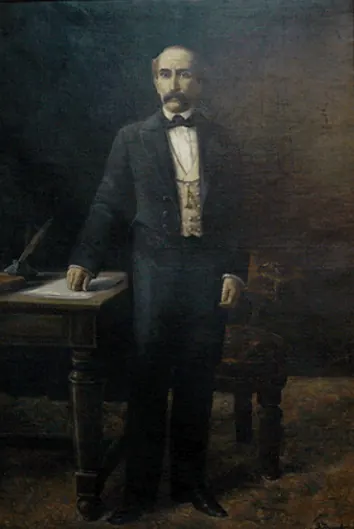
Definition
Juan Pablo Duarte y Díez (1813–1876) was a founder of the Dominican Republic and one of its three Fathers of the Nation.
Explanation
Born in Santo Domingo on January 26, 1813, he advocated a sovereign republic rather than dependence on another power. Organizing an independence movement was central to his political activity, although many other people contributed to the process.
Cultural Context
Alongside Francisco del Rosario Sánchez and Matías Ramón Mella, Duarte occupies a central place in Dominican civic memory. His birthday opens a period of patriotic commemorations culminating on February 27.
La Trinitaria
In 1838 Duarte helped establish La Trinitaria, a clandestine society committed to founding an independent republic. Its small-group structure supported organization under the political circumstances of the period. Public education and cultural activities also helped communicate the independence ideal.
Independence in 1844
Duarte had gone into exile in 1843 and was absent when independence was proclaimed on February 27, 1844. He returned after the declaration. This distinction separates his contribution as an organizer and political thinker from the actions of Sánchez, Mella and others on that historic night.
Exile and legacy
Disputes over the direction of the new state led to further exile. Duarte returned briefly in 1864 during the Restoration War and died in Caracas on July 15, 1876. His remains were subsequently brought to the Dominican Republic and now rest at the Altar de la Patria.
Duarte in everyday life
His name appears on streets, institutions, Duarte province and Pico Duarte. These places are not the subject of this biography. The national flag and Independence Day have separate entries devoted to their meanings.
Frequently asked questions
When was Duarte born?
January 26, 1813.
Did he establish La Trinitaria?
Yes, he was its leading founder in 1838.
Was he present at the 1844 proclamation?
No, he was abroad and returned afterward.
Related terms
UASD
The Universidad Autónoma de Santo Domingo (UASD) is a public Dominican university headquartered in Santo Domingo, with regional campuses.
CultureTrinitaria (La Trinitaria)
La Trinitaria was a secret patriotic society founded in Santo Domingo on July 16, 1838, by Juan Pablo Duarte and fellow activists to establish an independent Dominican Republic.
CultureBandera nacional
The Dominican national flag consists of four blue and red quarters divided by a white cross, with the national coat of arms at the center of the official state version.
CultureCarnaval dominicano
Dominican carnival is a festive tradition of music, masks, costumes and performing groups, with regional expressions and celebrations especially associated with February.