Dominican carnival: history, masks and characters
Carnaval dominicano
carnaval · dominican carnival
Definition
Dominican carnival is a festive tradition of music, masks, costumes and performing groups, with regional expressions and celebrations especially associated with February.
Explanation
Carnival combines historical European festive elements with Caribbean and African contributions and adaptations. It did not emerge as a single celebration with an identical meaning nationwide. Characters, materials, rhythms and street performances reflect local histories and social change.
Cultural Context
February festivities coincide with a period of patriotic commemorations. Carnival and independence are connected in the Dominican calendar but are not the same holiday. Performing groups express community identity, creativity and craftsmanship.
Diablos cojuelos and masks
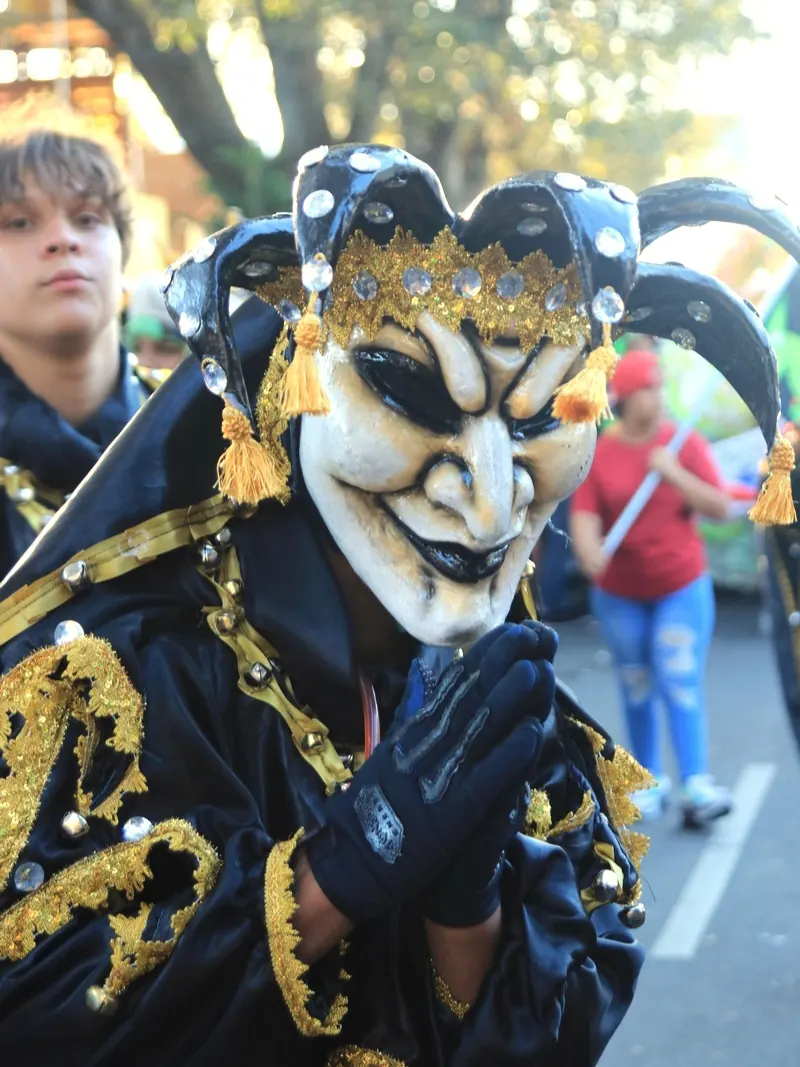
The diablo cojuelo is an iconic figure in several carnivals. Costumes may feature bright colors, bells and exaggerated mask shapes. Designs vary among cities and groups. Some characters carry vejigas as part of local festive practices, but not every group uses them.
Regional differences
La Vega is known for its diablos cojuelos, Santiago for lechones. Santo Domingo brings together expressions from multiple regions in parades. Each celebration has its own organization and characters; a regional costume does not represent every Dominican carnival.
Craftsmanship and comparsas
Making masks and costumes requires skills in design, modeling, painting and sewing. Groups prepare performances and develop visual identities. Characters can involve satire, humor and historical references whose interpretations vary locally.
A living tradition
Carnival is a living practice rather than a fixed collection of costumes. Artisans, musicians and participants renew its forms and transmit knowledge. For event dates and locations, consult the city pages; this entry explains the cultural tradition rather than a seasonal schedule.
Frequently asked questions
When is carnival celebrated?
Many celebrations take place in February, but dates vary.
What is a comparsa?
A group that participates collectively in carnival.
Is carnival the same everywhere?
No, regional traditions differ.
Related terms
Bandera nacional
The Dominican national flag consists of four blue and red quarters divided by a white cross, with the national coat of arms at the center of the official state version.
MusicMerengue
Merengue is one of the most important musical genres and dances of the Dominican Republic, and a central part of Dominican national identity.
MusicCarabiné
The Carabiné is a traditional Dominican dance and musical form performed by several couples following coordinated figures and movements.
CultureDiablo Cojuelo
The Diablo Cojuelo is an iconic Dominican carnival character known for expressive masks, elaborate costumes and, in many groups, a vejiga accessory.
CultureDía de la Independencia
Dominican Independence Day is celebrated every February 27 and commemorates the proclamation of national independence in 1844.
CultureFiestas patronales
Fiestas patronales are local celebrations connected with a community's traditional patron saint or religious dedication.