Diablo Cojuelo: Dominican carnival masks and tradition
Diablo Cojuelo
diablos cojuelos · diablo de carnaval
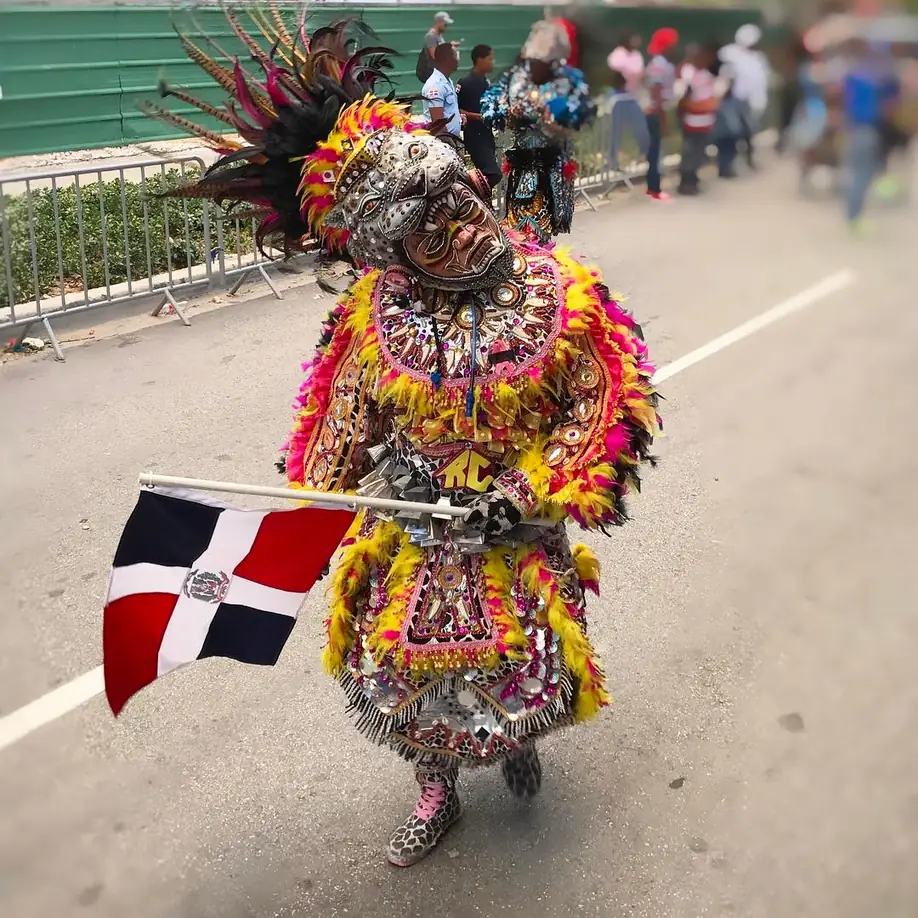
Definition
The Diablo Cojuelo is an iconic Dominican carnival character known for expressive masks, elaborate costumes and, in many groups, a vejiga accessory.
Explanation
The devil figure has been transformed by different communities through mask making, characterization and performance. In carnival it is not necessarily a statement of religious belief; its festive role can involve play, satire and exaggeration. Names and attributes vary between places.
Cultural Context
Carnival groups develop visual identities through colors, shapes and accessories. The artisans who make costumes and masks are an essential part of this cultural heritage.
Masks and costumes
Masks may have horns, teeth and exaggerated features, but no universal design exists. Costumes include fabrics, ornaments and sometimes bells. Workshops combine traditional techniques with contemporary materials. Groups can renew designs while maintaining local references.
Regional differences
Vejigas and participation
Some groups carry a vejiga as a festive accessory. Audience interaction depends on local rules and customs. Spectators need not accept physical contact. Keeping an appropriate distance and respecting instructions allows everyone to enjoy the parade.
Character versus celebration
The Diablo Cojuelo is a character within carnival, not the name of the entire festival. Our Carnaval dominicano entry explains the national tradition, while city pages cover local contexts and visitor planning.
Frequently asked questions
Do all devils wear the same mask?
No, designs differ by locality and group.
Is a Santiago lechón the same figure?
They are related carnival figures with distinct local names and characteristics.
What is a comparsa?
A group taking part collectively in festivities.
Related terms
Carnaval dominicano
Dominican carnival is a festive tradition of music, masks, costumes and performing groups, with regional expressions and celebrations especially associated with February.
MusicCarabiné
The Carabiné is a traditional Dominican dance and musical form performed by several couples following coordinated figures and movements.
CultureDía de la Independencia
Dominican Independence Day is celebrated every February 27 and commemorates the proclamation of national independence in 1844.