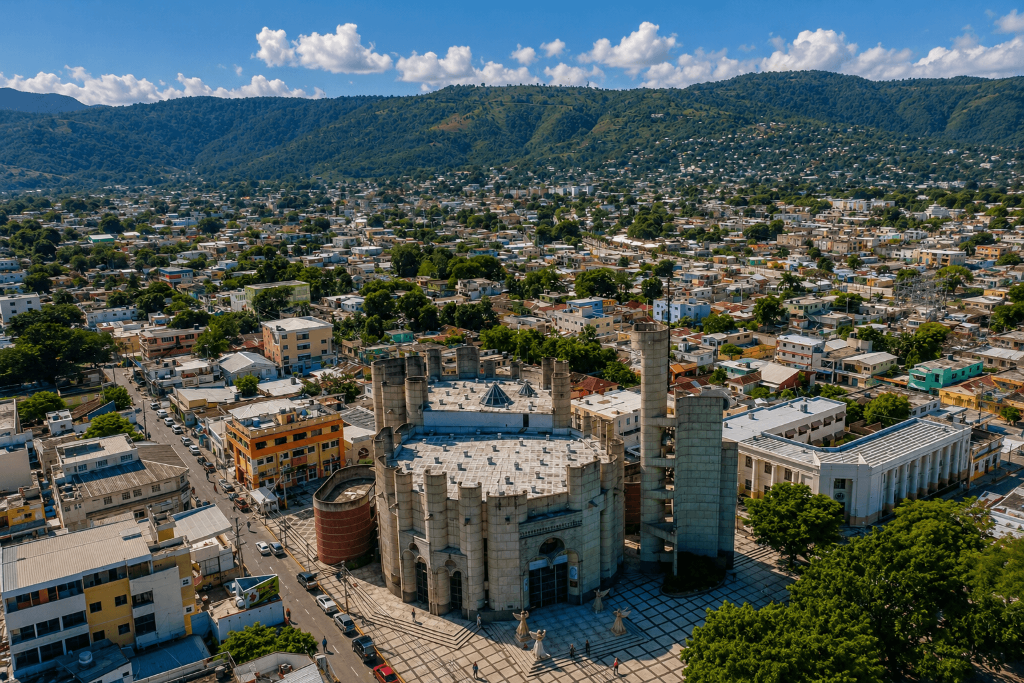
La Vega, officially known as Concepción de La Vega, is one of the most historically and culturally important cities in the Dominican Republic. Located in the fertile Cibao region, the city is widely known for its spectacular carnival, deep religious traditions, agricultural surroundings, and close connection to the mountains of the country's interior.
Unlike the coastal destinations that shape the international image of the Dominican Republic, La Vega represents a different side of the country. There are no large beach resorts or palm-lined hotel zones here. Instead, visitors encounter a lively Dominican city surrounded by green countryside, farms, rivers, hills, and some of the most beautiful mountain landscapes in the Caribbean.
La Vega is a place where history remains visible, traditions are celebrated with enormous energy, and local life continues at its own rhythm. It combines an important colonial past with modern Dominican culture, making it one of the most interesting cities for anyone who wants to understand the country beyond its beaches.
La Vega sits in the heart of the Dominican Republic and pairs perfectly with visits to Jarabacoa and Santiago. Browse available activities in the region.
Feb
Carnaval Vegano
1562
City Rebuilt
Cibao
Fertile Valley
Santo Cerro
Pilgrimage Site
A City in the Fertile Cibao Valley
La Vega lies in the heart of the Cibao, one of the Dominican Republic's most productive and culturally influential regions. The city is surrounded by fertile land and benefits from its position near the Cordillera Central. The wider La Vega region is strongly associated with agriculture, fresh produce, coffee, flowers, livestock, and rural communities. Local markets are filled with fruits, vegetables, herbs, and other products from the surrounding countryside. The landscape also shapes the atmosphere of La Vega. Although it is a busy urban center, nature is never far away. Mountain roads lead toward Jarabacoa and Constanza, while waterfalls, forests, coffee farms, rivers, and protected areas can be reached from the city. This position gives La Vega a special identity — it feels urban without being disconnected from rural life and modern without losing its agricultural roots.
One of the Oldest Cities in the Americas
The history of La Vega reaches back to the earliest years of European colonization in the Americas. The original settlement, known as Concepción de La Vega, developed near Santo Cerro after a fortress was established in the late 15th century. Before the arrival of the Spanish, the area formed part of the Taíno chiefdom of Maguá and was associated with the cacique Guarionex. During its most prosperous years, the original La Vega became one of the most significant European settlements on the island, growing rapidly after gold was discovered in the region. Its story changed dramatically in 1562, when a major earthquake destroyed much of the original city. The survivors later established a new settlement at the present location of La Vega. The ruins of the former city are now known as La Vega Vieja — the Archaeological and Historical National Park of Pueblo Viejo. This history gives La Vega a depth that many visitors do not expect. The modern city is connected to one of the earliest chapters of urban history in the Americas.
Carnaval Vegano
Dominican Republic's most famous carnival
La Vega Vieja
Archaeological ruins of the original colonial city
Santo Cerro
Major pilgrimage site & panoramic valley views
Cibao Agriculture & Coffee
Fertile valley, farms, markets and mountain coffee
The Famous Carnival of La Vega
La Vega is best known across the Dominican Republic for the Carnaval Vegano, one of the largest, oldest, and most energetic carnival celebrations in the country. Every February, the atmosphere of the city changes completely. Streets fill with elaborate costumes, music, crowds, performers, masks, and the famous Diablos Cojuelos. These colorful characters wear richly decorated costumes and dramatic masks with horns, teeth, and expressive faces. They are among the most recognizable symbols of Dominican carnival culture. Carnival in La Vega is not a small event created mainly for tourists. It is deeply connected to local identity. Families, artists, costume designers, community groups, and performers work for months to prepare their appearances. The celebration traditionally takes place on Sundays in February, when large crowds gather in the city. For the people of La Vega, carnival is not simply entertainment. It is a living tradition through which the city expresses its humor, creativity, history, community spirit, and Dominican identity.
The Diablos Cojuelos and Carnival Craftsmanship
The Diablos Cojuelos are central to the carnival experience in La Vega. Their costumes often combine bright colors, mirrors, bells, embroidery, feathers, beads, and impressive masks. Another famous element is the inflated bladder, or vejiga, traditionally carried by the Diablos Cojuelos — performers use it to playfully strike spectators during carnival. Behind the public spectacle lies an important artistic culture. Mask makers and costume designers preserve old techniques while constantly developing new ideas. Carnival groups compete for recognition, and many costumes tell stories or reflect historical, religious, social, or imaginative themes. The city's Carnival Museum helps preserve and explain this tradition throughout the year, allowing visitors to discover the costumes, characters, and cultural meaning of the festival even outside February.
Top Highlights
Religion and Santo Cerro
Religion has played an important role in La Vega since the colonial period. The Catedral de la Inmaculada Concepción is one of the most recognizable buildings in central La Vega. Its unusual modern architecture gives it a very different appearance from traditional colonial churches. A short distance from the city stands Santo Cerro, one of the Dominican Republic's most important religious landmarks. The sanctuary is located on a hill overlooking the green La Vega Valley and is closely connected to devotion to Our Lady of Las Mercedes, the patron saint of the Dominican Republic. Every year, especially around September 24, pilgrims travel to Santo Cerro for religious celebrations. From the hill, visitors can look across the wide and fertile valley surrounding La Vega. The combination of panoramic views, historical symbolism, and religious tradition makes Santo Cerro one of the most meaningful places in the province.
Food, Markets, and Everyday Life
Outside the carnival season, La Vega has the atmosphere of a busy and authentic Dominican city. Streets are filled with motorcycles, local businesses, schools, restaurants, markets, shops, and people moving through their daily routines. Food in La Vega reflects the city's location in one of the country's most fertile areas. Traditional Dominican meals are widely available, including la bandera Dominicana, mangú, sancocho, tostones, mofongo, stewed meat, roasted pork, empanadas, and fresh tropical juices. The surrounding province also has strong connections to coffee production, and local coffee forms part of the agricultural character of the region. Eating in La Vega usually feels more local than tourist-focused — simple restaurants, bakeries, roadside food stops, market stalls, and family-run businesses are often the best places to experience the city's everyday flavors.
A Gateway to the Dominican Mountains
La Vega is strategically located between several of the Dominican Republic's most important inland destinations. Jarabacoa and Constanza are part of the wider province and can be reached from the city by mountain roads. Jarabacoa is known for rivers, waterfalls, rafting, hiking, and a mild mountain atmosphere. Constanza is surrounded by highland agriculture, valleys, cooler temperatures, and access to natural areas such as Valle Nuevo. La Vega therefore works well as a connection between the urban Cibao and the Cordillera Central. Visitors can experience the city's culture and history before continuing toward waterfalls, coffee farms, forests, mountain villages, and hiking areas.
Why Visit La Vega?
La Vega is worth visiting for travelers who want to experience Dominican culture away from the major coastal tourism zones. It offers history, carnival, religion, local food, agricultural traditions, daily city life, and access to the mountains in one destination. February is the most exciting time to experience the city because of the Carnaval Vegano. However, La Vega remains interesting throughout the year. Outside carnival season, visitors can explore the city more quietly, visit the cathedral and Carnival Museum, discover La Vega Vieja, travel to Santo Cerro, walk through the market, and explore the surrounding countryside. La Vega may not have the beaches of Punta Cana or the colonial streets of Santo Domingo. Its identity comes from something different: history, fertile land, spiritual tradition, artistic creativity, and the unmistakable pride of the Cibao.
FAQ About La Vega
What is La Vega known for?
La Vega is best known for the Carnaval Vegano, one of the Dominican Republic's largest and most important carnival celebrations. The city is also known for its religious heritage, agricultural surroundings, La Vega Vieja, Santo Cerro, coffee culture, and access to the Cordillera Central.
What is the official name of La Vega?
The city is officially known as Concepción de La Vega, although it is usually called simply La Vega.
Where is La Vega located?
La Vega is located in the Cibao region of the Dominican Republic, between Santo Domingo and Santiago and close to the Cordillera Central.
Is La Vega worth visiting?
Yes, La Vega is worth visiting for its carnival, history, religious traditions, local culture, food, markets, archaeological heritage, and access to the Dominican mountains.
When is the Carnival of La Vega?
The Carnaval Vegano is celebrated during February, with the largest public events traditionally taking place on Sundays. February is the busiest and most energetic time to visit the city.
What are the Diablos Cojuelos?
The Diablos Cojuelos are traditional carnival characters known for their colorful costumes, elaborate horned masks, and inflated bladders called vejigas. They are among the most famous symbols of the Carnaval Vegano.
What is La Vega Vieja?
La Vega Vieja is the archaeological site of the original colonial settlement of Concepción de La Vega. The city was destroyed by an earthquake in 1562 and survivors relocated to where modern La Vega stands today.
What is Santo Cerro?
Santo Cerro is a religious sanctuary on a hill near La Vega, closely associated with Our Lady of Las Mercedes and one of the Dominican Republic's most important pilgrimage destinations.
Is Jarabacoa part of La Vega?
Jarabacoa is a separate municipality within La Vega Province. It is not part of La Vega city, but the two destinations are closely connected.
How many days should you spend in La Vega?
One or two days are usually enough to explore the main cultural and historical places in La Vega. During carnival season, a longer stay can be useful because events attract large crowds.
Is La Vega a beach destination?
No, La Vega is an inland city known for culture, history, carnival, agriculture, religious sites, and its proximity to the mountains rather than beaches.
What food should you try in La Vega?
Visitors can try traditional Dominican dishes such as la bandera Dominicana, mangú, sancocho, mofongo, tostones, stewed meats, roasted pork, empanadas, fresh juices, and locally grown coffee.
What is the best time to visit La Vega?
February is the best time for travelers who want to experience the Carnaval Vegano. For history, culture, religious tourism, and nature, La Vega can be visited throughout the year. September is also important for religious celebrations at Santo Cerro.