Uva de playa
Uva de playa: seagrape on the Dominican coast
uvero · uvero de playa · uva de mar · Coccoloba uvifera
Definition
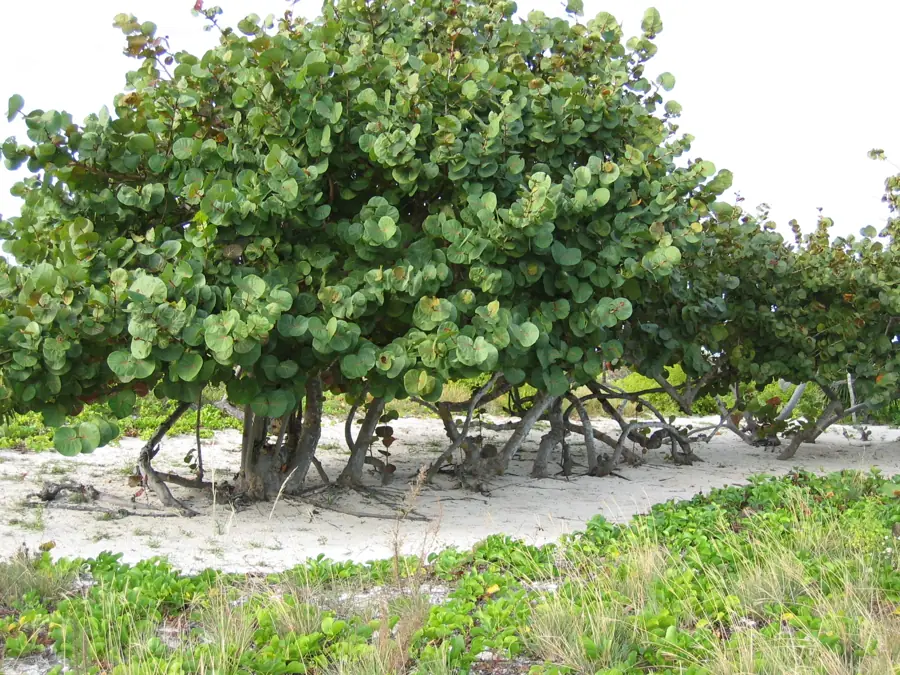
Uva de playa is the Spanish name for seagrape (Coccoloba uvifera), a coastal plant with rounded leaves and edible fruit growing in grape-like clusters.
Cultural importance
Seagrape grows along tropical coastlines, including those of the Dominican Republic. It belongs to the buckwheat family rather than the grapevine family. Exposure to coastal winds influences whether it grows as a spreading shrub or small tree.
Identifying the plant
Its large, leathery leaves have rounded outlines and prominent veins. Fruits develop in clusters and often become purple as they ripen. Each contains a large seed and relatively little pulp.
Coastal habitats
Seagrape tolerates salt spray and coastal wind. Its spreading branches provide shade, and coastal vegetation can help stabilize sandy areas. Preserve plants in protected habitats.
Uses and names
Ripe fruits may be eaten or made into jelly. Uvero and uva de mar are alternative names for the same species. They are unrelated to ordinary grapevines. Only eat wild fruits when confidently identified and harvesting is permitted.
Frequently asked questions
What is uva de playa?
Seagrape, Coccoloba uvifera.
Is its fruit edible?
Yes, when ripe and correctly identified.
Is uvero the same?
Often, yes.
Related Dominican foods
Jobo
Jobo, also called jobo de puerco, is the fruit of Spondias mombin, a tropical tree in the cashew family.
Níspero
Níspero in the Dominican Republic usually refers to sapodilla (Manilkara zapota), a tropical fruit with brown skin, sweet flesh and dark seeds.
Tamarindo
Tamarindo is the fruit of Tamarindus indica, whose sweet-sour pulp is commonly used in Dominican beverages and sweets.
Flor de Bayahíbe
The Bayahíbe rose (Leuenbergeria quisqueyana) is an endemic Dominican cactus designated the national flower by Law 146-11 in 2011.