Níspero
Níspero: sapodilla in the Dominican Republic
nispero · sapodilla · Manilkara zapota · chicozapote
Definition
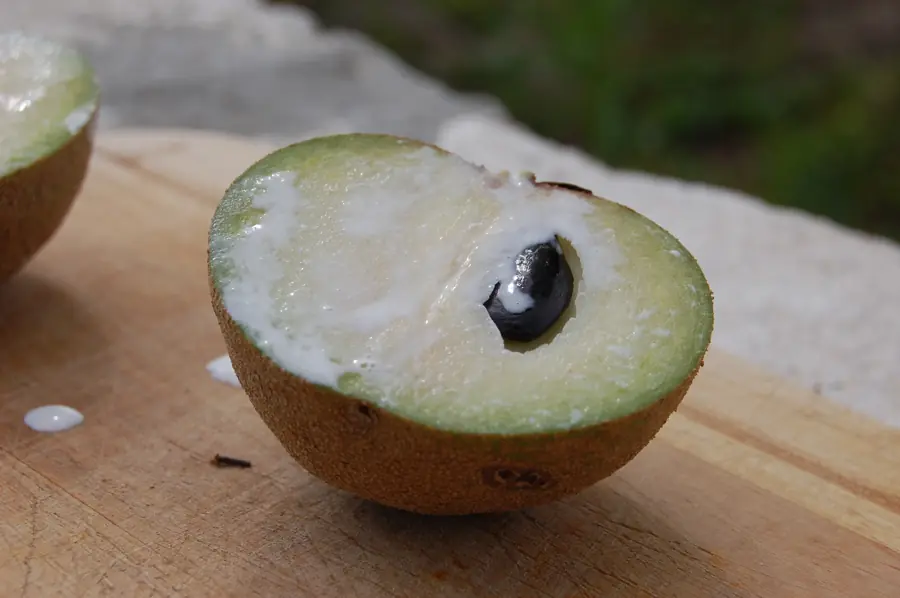
Níspero in the Dominican Republic usually refers to sapodilla (Manilkara zapota), a tropical fruit with brown skin, sweet flesh and dark seeds.
Cultural importance
This evergreen tropical tree originated in Mexico and Central America and is cultivated in the Caribbean. Its latex was historically used to produce chicle, a chewing gum ingredient. The edible fruit is the focus in Dominican markets and kitchens.
Flavor and ripeness
Ripe sapodilla has soft, sometimes grainy brown flesh with a sweet flavor reminiscent of caramel. Unripe fruits are firm, astringent and may release sticky latex. The photograph shows an unripe sapodilla.
Sapodilla versus loquat
Níspero can name different fruits in Spanish-speaking regions. In Spain it often means loquat (Eriobotrya japonica), with yellow-orange fruit. Dominican usage generally refers to brown sapodilla. Scientific names help distinguish them.
How to eat it
Cut ripe fruit in half, scoop out the flesh and discard skin and seeds. The pulp can also be blended into shakes or added to fruit salads. Ask for nísperos maduros at a market; availability varies by season and region.
Frequently asked questions
What is Dominican níspero?
Sapodilla, usually Manilkara zapota.
Is it a loquat?
Not normally in Dominican usage.
What does it taste like?
Sweet, often with caramel-like notes.
Related Dominican foods
Zapote
Zapote commonly refers to mamey sapote (Pouteria sapota) in the Dominican Republic, a tropical fruit with rough brown skin, orange-red flesh and a large dark seed.
Uva de playa
Uva de playa is the Spanish name for seagrape (Coccoloba uvifera), a coastal plant with rounded leaves and edible fruit growing in grape-like clusters.
Jobo
Jobo, also called jobo de puerco, is the fruit of Spondias mombin, a tropical tree in the cashew family.
Guayaba
Guayaba is the fruit of Psidium guajava, eaten fresh and used for juices, sweets and preserves in the Dominican Republic.