Mangó (Mango)
Mangó: mango in the Dominican Republic
mangó · mango · Mangifera indica · mango banilejo
Definition
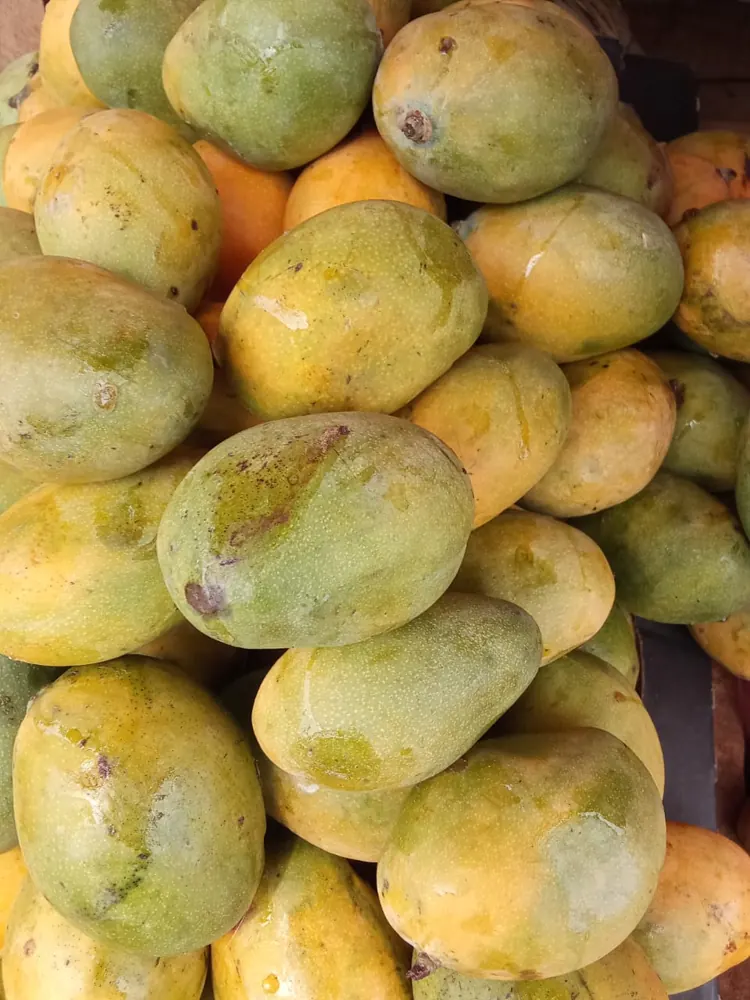
Mangó or mango is the fruit of the mango tree (Mangifera indica), grown in numerous varieties in the Dominican Republic.
Cultural importance
Mango trees originated in Asia and spread to tropical regions around the world. The fruits vary in size, skin color, sweetness and fiber. A ripe mango may still have green skin, so color alone is not a reliable guide.
Baní and mango season
Baní in Peravia province is particularly associated with mango production. Mango-focused events are held there. Many varieties are harvested in late spring and summer, although timing varies with location, weather and cultivar.
Taste and uses
Ripe mangoes have aromatic sweet flesh ranging from smooth to fibrous. They are eaten fresh, blended into juices or shakes, or added to fruit salads. Unripe mangoes are more acidic. The photograph is illustrative, not necessarily a Dominican cultivar.
Buying ripe fruit
A pleasant aroma and slight softness can indicate ripeness. Avoid fruit with a fermented smell or extensive damage. Wash the skin before cutting. Ask ¿Tiene mangos maduros? when looking for ripe mangoes.
Frequently asked questions
What does mangó mean?
Mango.
Where are mangoes grown?
Baní is a well-known growing area.
When is mango season?
Often late spring and summer, depending on variety and region.
Related Dominican foods
Zapote
Zapote commonly refers to mamey sapote (Pouteria sapota) in the Dominican Republic, a tropical fruit with rough brown skin, orange-red flesh and a large dark seed.
Níspero
Níspero in the Dominican Republic usually refers to sapodilla (Manilkara zapota), a tropical fruit with brown skin, sweet flesh and dark seeds.
Ñapa
A ñapa is a small free extra given by a seller to a customer in addition to what was purchased. De ñapa means as a free extra or on top.
Lechosa
Lechosa is the common Dominican name for papaya (Carica papaya), a tropical fruit with sweet orange flesh when ripe.