Dominican amber (Ámbar dominicano)
Ámbar dominicano
ámbar
Definition
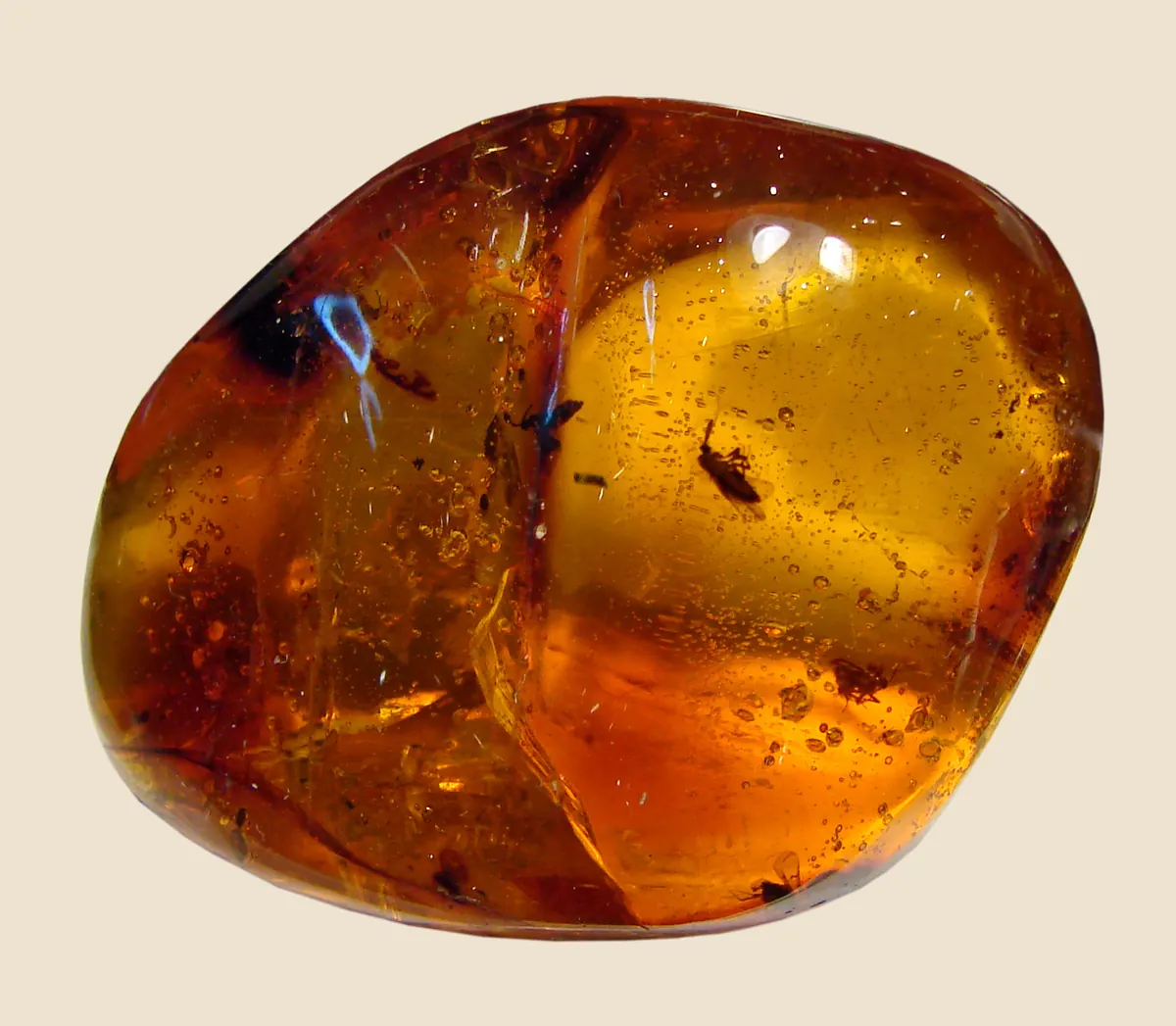
Dominican amber is fossilized tree resin from the Dominican Republic, prized for transparency, preserved inclusions and rare specimens that display blue fluorescence.
Explanation
Amber forms as resin undergoes chemical changes over geological time. Unlike larimar, amber is an organic gem material rather than a mineral. Its appearance varies from pale yellow to deep brown; preserved insects and plant material can reveal aspects of ancient ecosystems.
Cultural Context
Amber connects natural history with jewelry making and tourism. Puerto Plata is particularly associated with this heritage. A museum visit is a useful starting point for understanding genuine specimens and their use in jewelry.
What is blue amber?
Some specimens emit a blue or greenish-blue glow under ultraviolet stimulation, especially against a dark background. Their underlying body color may be yellow. Blue amber is neither universal in the Dominican Republic nor exclusive to it.
Where to see Dominican amber
The Museo del Ámbar in Puerto Plata and Museo Mundo del Ámbar in Santo Domingo introduce visitors to amber and its natural history. Check current visitor information before going.
Buying amber as a souvenir
Ask about origin and material, request credible documentation for expensive pieces, and be cautious about implausibly cheap specimens with perfect inclusions. Color alone cannot establish authenticity or geographic origin.
How inclusions form
Fresh resin flowing from a tree can trap small organisms or plant fragments. As resin becomes amber, some of this material remains preserved. An inclusion does not automatically determine a specimen's price: scientific value depends on identification, preservation and documentation.
Amber, copal and artificial resin
Copal is natural resin that is geologically less mature than amber. Synthetic resin objects can imitate color and inclusions. Avoid flame, solvent or scratch tests on jewelry, as they can cause damage. For expensive pieces, an independent gemological laboratory can provide a more reliable identification.
Natural history and producing regions
Dominican amber is associated with deposits in the north and east of the country. Much Dominican fossil resin is linked to trees of the genus Hymenaea, related to living species. Resin provides a partial window into ancient tropical forests: it preserves certain small organisms particularly well, but does not represent every creature in the ecosystem equally.
Frequently asked questions
Is amber a mineral?
No. It is an organic gem material made from fossilized resin.
Why does blue amber glow?
Certain components fluoresce when excited by ultraviolet light.
Where can I visit an amber museum?
Puerto Plata and Santo Domingo both have museums dedicated to amber.
Related terms
Oro dominicano
Gold, or oro in Spanish, had cultural uses on Hispaniola before European colonization, later shaped the Spanish colonial economy and is still mined in the Dominican Republic.
CultureLarimar
Larimar is a rare blue variety of pectolite known as a gemstone from Barahona in southwestern Dominican Republic.