Activities in Santiago
From the Monumento and the Centro León to the historic center, cigar factories, baseball at Estadio Cibao and excursions to Jarabacoa and Constanza — here you'll find the best activities in Santiago for your trip.
Santiago de los Caballeros shows a side of the Dominican Republic that many visitors never get to know. There are no large beach resorts and no tourist old town like in Santo Domingo. Instead, Santiago stands for the Cibao, for tobacco and cigars, baseball, Merengue típico, art, commerce and a strong regional identity.
Santiago is the second-largest city in the Dominican Republic and the economic and cultural center of the Cibao. The city lies in the fertile Valle del Cibao between mountain ranges and is one of the most important urban centers in the country.
If you are looking for activities in Santiago, you should not arrive with the expectations of a classic resort. The city reveals itself primarily through its culture, its history and daily life. You can visit the city's landmark, discover Dominican art, walk through historic streets, see how premium cigars are made, experience a baseball game and listen to Merengue típico or Bachata in the evening.
Especially those who already know the Dominican Republic from its coasts will discover a completely different side of the country in Santiago.
Visit the Monumento a los Héroes de la Restauración
Few buildings are as closely associated with Santiago as the Monumento a los Héroes de la Restauración.
The large white monument stands elevated above the city and is visible from many parts of Santiago. It commemorates the men and women who fought for the restoration of Dominican independence during the Restoration War in the 19th century.
Inside is a museum with historical objects and information about the Restoration War.
A visit is also worthwhile for the view. From the upper areas of the Monumento you can look out over large parts of Santiago and, on clear days, as far as the surrounding mountains.
Around the building lies a large green area. Especially in the late afternoon and evening, many residents of the city gather here.
This makes the Monumento not just a historical landmark. It remains part of Santiago's social life to this day.
Experience the Monumento in the evening
If you only want to visit the Monumento once, late afternoon is a particularly good time.
During the day you can visit the museum and enjoy the view. As soon as the sun sets, the atmosphere changes.
The monument is illuminated and the evening life begins around it. Families, couples and groups of friends gather in the area and the restaurants and bars in the adjacent streets fill up.
This transition from historical monument to meeting place of the city shows very well how Santiago works.
Many sights are not preserved exclusively for tourists, but are part of daily life.
Discover the Centro León
If you want to better understand the culture of the Dominican Republic, you should visit the Centro León.
The cultural center is one of the most important cultural institutions in the country and deals with Dominican art, history and identity.
The exhibitions show, among other things, how culture has developed on Hispaniola and what influences have shaped today's Dominican society.
Modern and contemporary Dominican art also plays an important role.
This makes a visit go far beyond classic city history. Topics such as music, religion, everyday life, migration, art and social development are connected with each other.
The Centro León also regularly hosts concerts, film screenings, workshops, discussions and changing exhibitions.
If you have already spent a few days in the Dominican Republic and want to understand why the country is so culturally diverse, you will find a lot of background here.
Walk through the historic center of Santiago
Santiago does not have a Zona Colonial like Santo Domingo. Nevertheless, a walk through the historic center is worthwhile.
A good starting point is Calle del Sol.
The street is one of the oldest traffic arteries of the city and runs through the center. Along the route are historic buildings, shops, cultural institutions and several important sights.
Calle del Sol is not a staged pedestrian zone for visitors. Commerce, traffic and everyday life are just as much a part of it as historic architecture.
If you want to understand Santiago, you should not only visit sights, but also spend some time walking through the center.
Visit Parque Duarte and the Cathedral
In the middle of the historic center lies Parque Duarte.
The square has been one of the most important public places in Santiago for many generations. Large trees provide shade and several historic buildings stand around the park.
Directly next to it is the Catedral Santiago Apóstol el Mayor.
Together with the former town hall and other buildings, it forms one of the most architecturally interesting areas of the city center.
A visit does not take long and can be easily combined with a walk along Calle del Sol.
If you only have a few hours in the center, Parque Duarte and the Cathedral are among the places that can be easily combined.
See the Palacio Consistorial
Directly at Parque Duarte is the historic Palacio Consistorial.
The building was long closely connected to the administration and history of the city and is also culturally significant today.
Inside, changing exhibitions are shown. One part deals with the carnival of Santiago.
From the upper areas of the building there are also interesting perspectives over Parque Duarte, the Cathedral and Calle del Sol.
The Palacio Consistorial is therefore a good stop during a walk through the historic center.
Visit the Fortaleza San Luis
On the edge of the historic center lies the Fortaleza San Luis.
The history of the site as a military installation dates back to the 17th century. Today it houses a historical and cultural museum.
The collection includes pre-Columbian objects, documents, art and historical weapons.
This makes the Fortaleza particularly interesting if you are interested not only in Santiago itself, but also in the history of the Dominican Republic.
The location above the Río Yaque del Norte also connects the visit with a part of the city that many travelers would otherwise not get to know.
Search for souvenirs at the Mercado Modelo
Santiago also has a Mercado Modelo.
The market is located on Calle del Sol and is on a site that has been used for trade since the 19th century.
Today you can find handicrafts, jewelry and various souvenirs there.
If you are looking for Dominican products or small souvenirs, you can stop by here.
The market can be easily integrated into a walk through the center, as several sights are located in the surrounding area.
Discover Santiago as a city of cigars
Few products are as closely associated with Santiago and the Cibao as the cigar.
The fertile countryside around Santiago is one of the most important tobacco regions of the Dominican Republic. Numerous internationally known premium cigars are produced in Santiago and the surrounding towns.
The region is considered one of the most important centers of global premium cigar production.
Even if you don't smoke cigars yourself, a look behind the scenes can be interesting.
On a factory tour you can follow how tobacco leaves are sorted, fermented and processed, and how cigars are then rolled by hand.
This gives you an impression of how much manual work and experience goes into a product that plays a major role in the economy and identity of the Cibao.
Visit a cigar factory
One of the best-known names in the region is La Aurora.
The company was founded in 1903 and produces in Tamboril, just outside Santiago.
On factory tours you can see how different types of tobacco are processed and how cigars are made by hand.
Tamboril itself is closely connected to the tobacco industry. If you are more interested in the subject, you can combine a visit with other stops related to cigar production.
Before a trip, you should check the current visiting options and possible reservations.
For international visitors, a cigar factory is one of the activities most closely associated with Santiago.
Visit the Gran Teatro del Cibao
Directly opposite the Monumento is the Gran Teatro del Cibao.
The theater, opened in 1995, is one of the most important stages in the north of the Dominican Republic.
Concerts, theater performances, dance events and other cultural events take place here.
If an interesting performance takes place during your stay, a visit is particularly worthwhile.
But also architecturally, the theater together with the Monumento forms one of the most striking areas of the city.
If you like culture, you should take a look at the current event calendar before your trip.
Discover Casa de Arte
A smaller and more local alternative to the large cultural institutions is Casa de Arte.
Since the 1980s, it has offered space for exhibitions, music and cultural events.
The focus here is on local artists and Santiago's cultural scene.
Especially if you are interested not only in the major sights, Casa de Arte can provide an interesting insight into the city's creative life.
Since events change, it is worth checking the current program before visiting.
Discover street art and murals
Art in Santiago is not only found in museums.
In various parts of the city there are murals and public artworks. There are now even dedicated routes that connect several of these works.
The motifs often deal with local personalities, history, music and the identity of the Cibao.
If you like to photograph or explore cities on foot, you can combine classic sights with modern art.
This mix suits Santiago well: historic buildings stand alongside modern urban development and traditional culture alongside contemporary art.
Experience a baseball game of the Águilas Cibaeñas
Baseball is more than just a sport in the Dominican Republic.
This is particularly evident in Santiago.
The Águilas Cibaeñas are one of the best-known baseball teams in the country and play their home games at Estadio Cibao.
During the Dominican winter season, which runs roughly from October to January, you can attend games there.
Even if you have hardly followed baseball before, you can enjoy a stadium evening. Music, food, discussions in the stands and the emotional support of the fans are just as much a part of it as the game.
If you visit Santiago during these months, you should check whether a home game takes place during your stay.
An evening at Estadio Cibao is one of the best ways to experience Dominican sports culture firsthand.
Listen to Merengue típico
Santiago lies in the middle of the Cibao, a region closely associated with Merengue típico.
This form of Merengue is traditionally played with accordion, güira and tambora, among other instruments, and differs significantly from many more modern Merengue productions.
In Santiago and the surrounding region, this music remains part of cultural life to this day.
Depending on the evening, you can find bars, events or smaller concerts with Merengue típico, Bachata and other Dominican music.
If you only visit Santiago during the day, you miss an important part of the city.
Music here is not a tourist show, but part of everyday life.
Experience the nightlife of Santiago
As one of the largest cities in the country, Santiago offers a wide selection of restaurants, bars and clubs.
Particularly around the Monumento and in various modern neighborhoods, you will find options for an evening outside the historic center.
The nightlife is more oriented toward the local population than in the well-known resort areas.
That is exactly what makes it interesting for visitors.
You hear Dominican music, international hits and, depending on the location, Bachata, Dembow or Merengue.
On weekends, the evening often starts late and can last well into the night.
Try Cibao cuisine
Santiago is also a good place to get to know the Dominican Republic culinary.
The cuisine of the Cibao is closely connected to the agricultural products of the region.
Plantains, yuca, rice, beans, pork, chicken and various stews play an important role.
Dishes like Mangú, Mofongo, Sancocho and La Bandera Dominicana can be found in many variations.
In addition to traditional cuisine, Santiago now has a large modern restaurant scene with international influences.
This allows you to choose between small local restaurants and modern gastronomy.
Try Yaroa in Santiago
One dish particularly associated with Santiago is Yaroa.
It is a very filling street food, usually consisting of french fries or plantains, meat, cheese and various sauces.
There are numerous variations and hardly a single fixed composition.
Yaroa belongs above all to the evening and the street food culture of the city.
If you want to eat what many locals associate with Santiago during your visit, you should try it at least once.
It's not fine dining. But that's not the point.
Enjoy Dominican coffee
The Cibao is surrounded by some of the most important agricultural regions of the Dominican Republic.
Coffee is also part of the culture of the country.
In Santiago you will find both classic Dominican cafeterías and modern specialty coffee shops.
A coffee in the morning is a good break during a walk through the city.
If you then continue inland toward Jarabacoa or Constanza, you get even closer to the growing areas.
Visit the Jardín Botánico de Santiago
If you are looking for some peace after a few hours in the traffic and bustle of the city, you will find it in the Jardín Botánico Profesor Eugenio de Jesús Marcano.
The botanical garden is located in the north of Santiago and comprises a large green area along the Río Jacagua.
On the grounds there are walking paths, themed garden areas, a bicycle route, a butterfly area and other nature offerings.
The garden is particularly pleasant in the morning or late afternoon.
Families can also spend several hours here.
Admission to the grounds is currently free, while fees may be charged for individual areas and activities.
Santiago suddenly seems much greener here than you would expect after a day in the city center.
Visit Santiago during carnival
February is a particularly interesting time to visit.
During carnival, parades and events traditionally take place in Santiago on several Sundays.
A central figure of the Santiago carnival is the Lechón.
The colorful costumes and masks differ in part significantly from the carnival traditions of other regions of the Dominican Republic.
Music, dance and large groups of participants move through the city.
If you are interested in Dominican culture, you will experience Santiago in a completely different way during these weeks.
Discover modern Santiago
Santiago consists not only of the historic center.
In recent decades, the city has developed strongly. Modern residential areas, restaurants, shopping centers, offices and new buildings shape large parts of today's Santiago.
It is therefore worth not staying exclusively around Calle del Sol and Parque Duarte.
Especially in the evening, much takes place in more modern parts of the city.
The contrast also shows why Santiago plays such an important economic role for the Dominican Republic.
Excursion to Jarabacoa
From Santiago you can quickly reach a completely different landscape.
Jarabacoa lies south of the city in the Cordillera Central and is one of the best-known mountain regions of the Dominican Republic.
Temperatures are often more pleasant than on the coast and the surroundings are characterized by mountains, rivers and dense vegetation.
Rafting, hiking, waterfalls and mountain biking are among the best-known activities.
The Salto de Jimenoa is a particularly popular destination.
If you visit Santiago for several days, you can plan a day for Jarabacoa or continue your trip in the mountains.
Excursion to Constanza
Constanza is also located in the Cordillera Central and can be an interesting next stop on a round trip from Santiago.
The high-altitude region is known for its comparatively cool climate, agriculture and mountain landscapes.
Strawberries, vegetables and other agricultural products are grown around Constanza.
The landscape differs greatly from the typical ideas of a Caribbean island.
That is exactly why a visit is worthwhile.
Santiago is particularly well suited as a connection point between the north coast and the mountain regions of the country.
Discover the Valle del Cibao
Santiago lies in the middle of one of the most significant landscapes of the Dominican Republic.
The Valle del Cibao stretches across a large part of the north and is one of the most important agricultural regions of the country.
Tobacco, rice, cocoa, coffee and numerous other products come from the Cibao.
If you leave Santiago and drive into the surrounding countryside, you quickly notice how closely agriculture and the city are connected.
This location also explains why Santiago became an important trading center over the centuries.
A road trip through the surrounding area can therefore be just as interesting as a classic city day.
Santiago shows the heart of the Cibao
Santiago is not without reason often called Ciudad Corazón, the city of the heart.
The city tells a different story of the Dominican Republic than the well-known resort areas.
It is not primarily about palm trees and Caribbean beaches. It is about the people and culture of the Cibao, about tobacco fields and cigar factories, baseball at Estadio Cibao, Merengue típico, art and a city that plays a central economic and cultural role for the north of the country.
The Monumento shapes the skyline, Dominican identity is explained at the Centro León, and in the historic center the past meets the everyday life of a modern metropolis.
Just a little outside, the green landscapes of the Cibao and the mountain regions around Jarabacoa and Constanza begin again.
If you want to experience more than the coasts during a trip through the Dominican Republic, you should not overlook Santiago de los Caballeros.
Frequently asked questions about activities in Santiago
What to do in Santiago?
If you are wondering what to do in Santiago, for a first visit you should plan the Monumento a los Héroes de la Restauración, the Centro León and the historic center around Calle del Sol and Parque Duarte.
After that, a cigar factory in Santiago or Tamboril is worthwhile, as tobacco culture is closely connected to the region. If you travel between October and January, a baseball game of the Águilas Cibaeñas at Estadio Cibao is one of the most interesting experiences.
In the evening you can eat around the Monumento or experience music and nightlife.
With more time, the botanical garden, Fortaleza San Luis and excursions to Jarabacoa or Constanza are added.
This way you can combine history, culture, food, music and nature within a few days.
You can find bookable activities and tours at GetYourGuide for Santiago.
What should you definitely see in Santiago?
If you only have a few hours, the Monumento should be at the top.
After that, the Centro León and the historic center are the most important stops.
With these three areas you already get a good impression of Santiago: The Monumento stands for the history and identity of the city, the Centro León for Dominican culture and the center for everyday life and historical development.
If you still have time, you can add Fortaleza San Luis or a cigar factory.
What can you do in Santiago in one day?
One day is enough for the most important sights if you don't pack your schedule too full.
In the morning you can visit the historic center with Calle del Sol, Parque Duarte and the Cathedral.
After that, the Centro León is a good option.
You can spend the late afternoon at the Monumento and stay there until sunset.
After that, dinner in the area is worthwhile.
This way you see several sides of the city within one day without constantly having to switch between distant places.
What can you do in Santiago in the evening?
In the evening, the area around the Monumento becomes particularly lively.
Restaurants, bars and other venues are in the immediate vicinity and are used by both residents and visitors.
If you want to experience Dominican music, you can look for events with Bachata or Merengue típico.
During baseball season, an evening game at Estadio Cibao is another option.
Santiago has a vibrant nightlife and by no means feels like a city where only restaurants stay open after sunset.
What can you do in Santiago in the rain?
Even in the rain there are several options.
The Centro León is one of the best choices, as you can spend a long time in the exhibition rooms there.
Fortaleza San Luis and other museums are also suitable.
A cigar factory can also be interesting regardless of a classic sightseeing day.
During short tropical showers, it is often worth waiting in a café or restaurant first. The weather can change quickly.
Is Santiago worth a visit?
Santiago is particularly worthwhile for travelers who already want to see more of the Dominican Republic than resorts and beaches.
The city does not have the density of classic sights of Santo Domingo and no beaches like Puerto Plata or Samaná.
Its strength lies elsewhere.
Santiago conveys a good impression of urban life in the north of the country and of the identity of the Cibao.
Cigar production, baseball, Merengue típico, food and local culture are not part of a tourist concept here. They are part of normal life.
That is exactly why Santiago can be interesting for travelers who want to get to know the country better.
How many days should you plan for Santiago?
Two days are a good basis for the most important sights.
On the first day you can combine the Monumento, the historic center and the Centro León.
On the second day there is time for cigar culture, the botanical garden, Fortaleza San Luis or other museums.
If you also want to attend a baseball game or experience the nightlife, you can plan three days.
Santiago is also well suited as a stopover on a trip between Santo Domingo, the north coast and the Cordillera Central.
When is the best time to visit Santiago?
Santiago can be visited all year round.
Since the city is inland, travel planning is less connected to beach weather.
The months from December to April are often pleasant for city sightseeing. At the same time, a large part of the baseball season falls in this period.
February is particularly interesting if you want to experience the Santiago carnival.
If you mainly want to get to know museums, gastronomy and culture, you can plan your trip regardless of a specific season.
Santiago or Santo Domingo: which city is more interesting?
Both cities show very different sides of the Dominican Republic.
Santo Domingo, with its Zona Colonial, has some of the most important historical sights in the Americas and is much larger and more international as the capital.
Santiago is more compact and more strongly shaped by the culture of the Cibao.
If you are interested in colonial history, you will find more classic sights in Santo Domingo.
If you want to get to know cigar culture, baseball, Merengue típico and life in the north of the country, you should visit Santiago.
On a longer trip, it is therefore not a choice between the two cities, but a combination.
Discover activities, sights and experiences in Santiago and plan your personal Dominican Experience.
Bookable Activities:
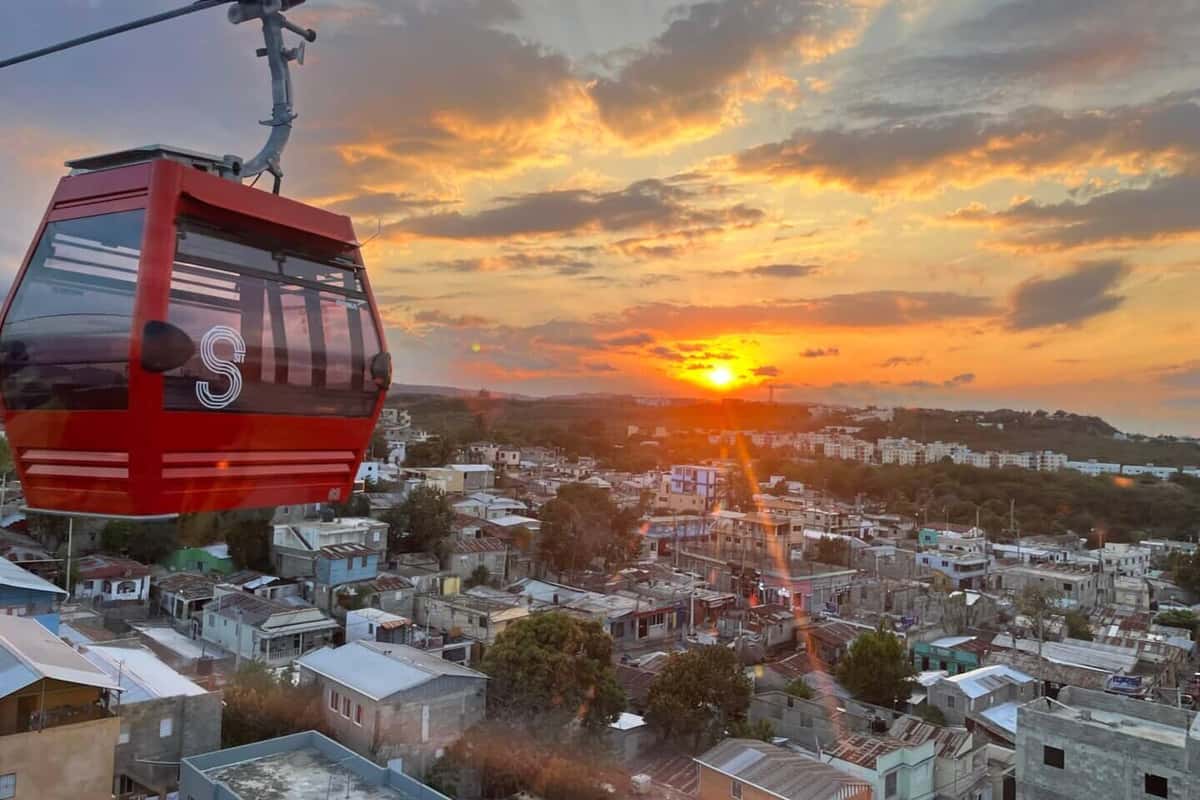
Santiago City Heights Tour with Cable Car
More Information
Damajagua Waterfalls, Zipline & Buggy
More Information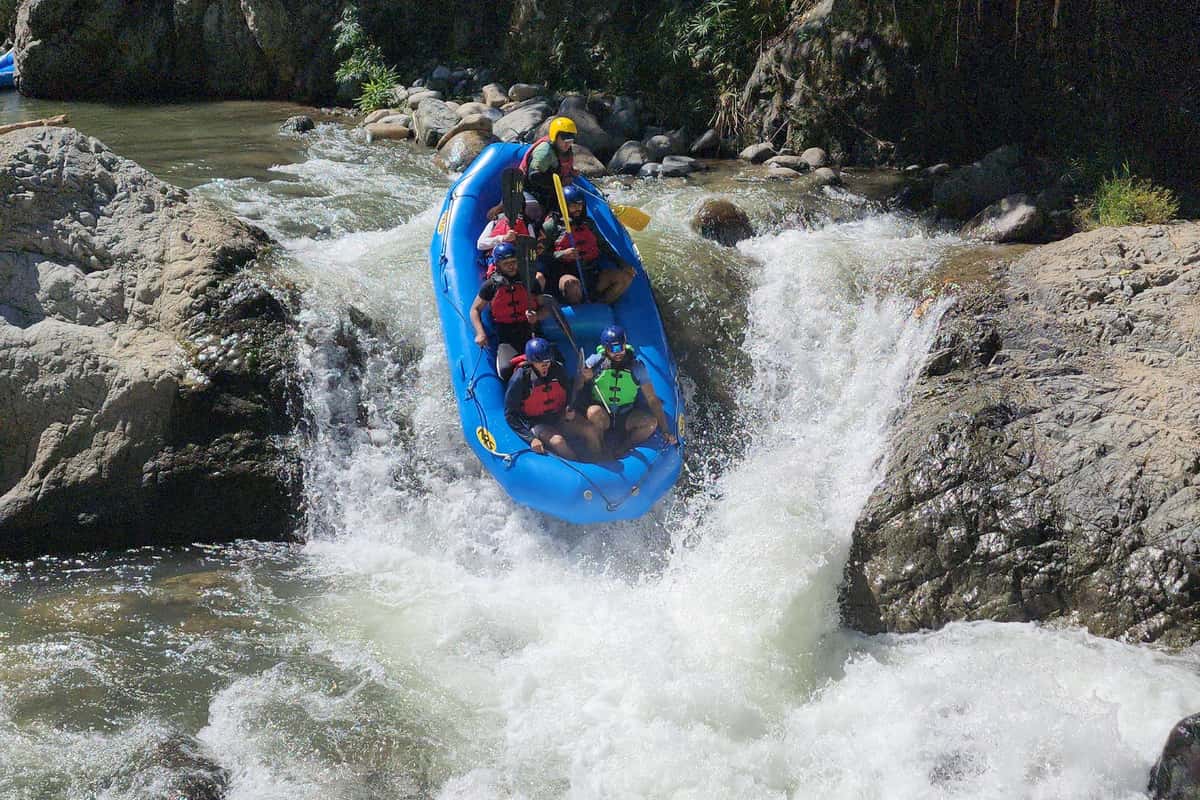
Jarabacoa Rafting Tour with Lunch
More Information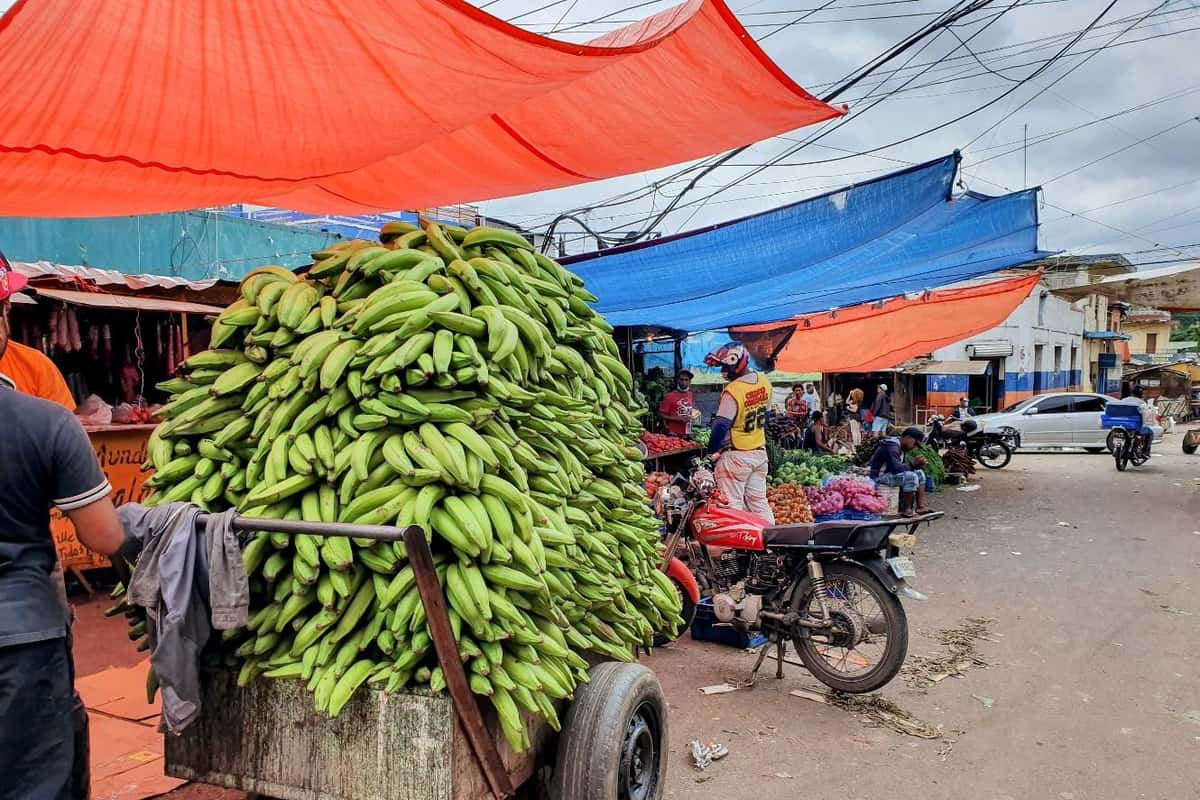
Santiago Cocoa, Coffee, Cigars & Market
More InformationReady for your next adventure?
Discover our best deals and promotions for the Dominican Republic.
Explore Deals