Plátano
Plátano: plantains in the Dominican Republic
plátano verde · plátano maduro · plantain · Kochbanane
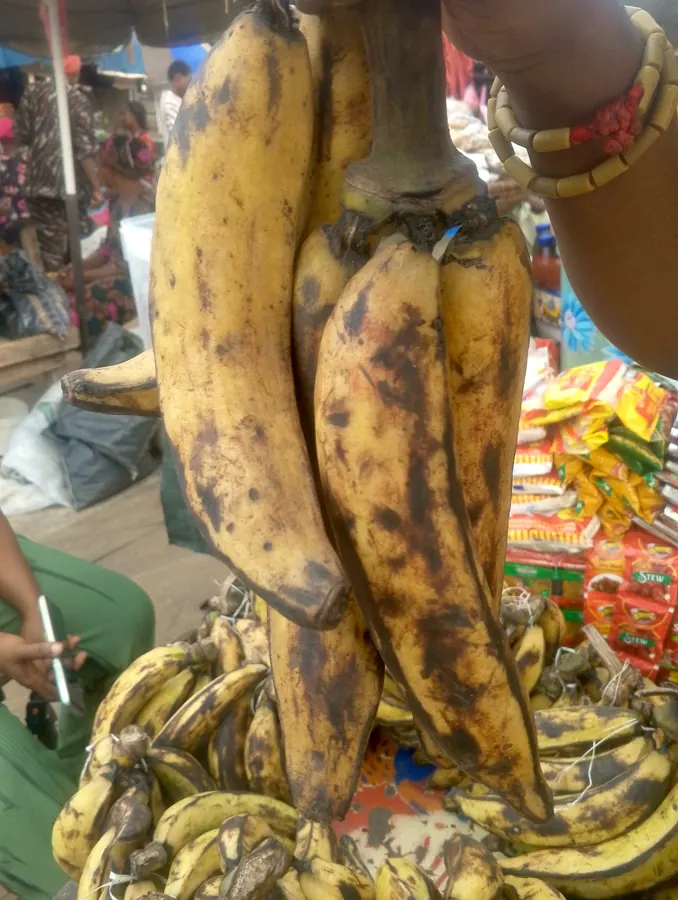
Definition
Plátano usually means plantain in the Dominican Republic, a starchy banana used green or ripe in many savory and sweet dishes.
Cultural importance
Plantains are central to Dominican cooking. They belong to the genus Musa, like dessert bananas, but their varieties and stages of ripeness differ in culinary properties.
Green and ripe plantains
Green plantains are firm, starchy and relatively unsweet. During ripening, starch converts partly to sugar and the skin turns yellow or develops dark patches. Ripe plantains suit fritos maduros and pastelón.
Mangú, mofongo and tostones
Plantain versus guineo
Guineo usually denotes a regular banana; green bananas may also be cooked. Plantains are generally larger and normally cooked. Ask for plátanos verdes or maduros at the market. The photograph is illustrative.
Frequently asked questions
What is plátano?
In Dominican usage, usually plantain.
Are green plantains eaten raw?
They are normally cooked.
What is guineo?
Usually a regular banana.
Related Dominican foods
Víveres
In Dominican cuisine, víveres commonly refers to starchy staples such as plantains, cassava, yam, sweet potatoes and yautía.
Tostones
Tostones are flattened, usually twice-fried green plantain pieces, also called fritos verdes in the Dominican Republic.
Queso de freír
Queso de freír is a fresh white cheese, usually made from cow's milk, that retains its shape relatively well when fried.
Mangú
Mangú is a traditional Dominican dish made by boiling and mashing green (unripe) plantains until soft and creamy. It is best known as a breakfast staple in the Dominican Republic, usually topped with tangy red onions and often served with fried eggs, Dominican salami, and fried cheese.