At a glance
- Location
- Río San Juan · María Trinidad Sánchez
- Character
- Small, sheltered bay with rock formations
- Access
- By local road or some Gri-Grí lagoon boat tours
- Good for
- Relaxing, coastal scenery and snorkeling on suitable days
Where is Playa Caletón?
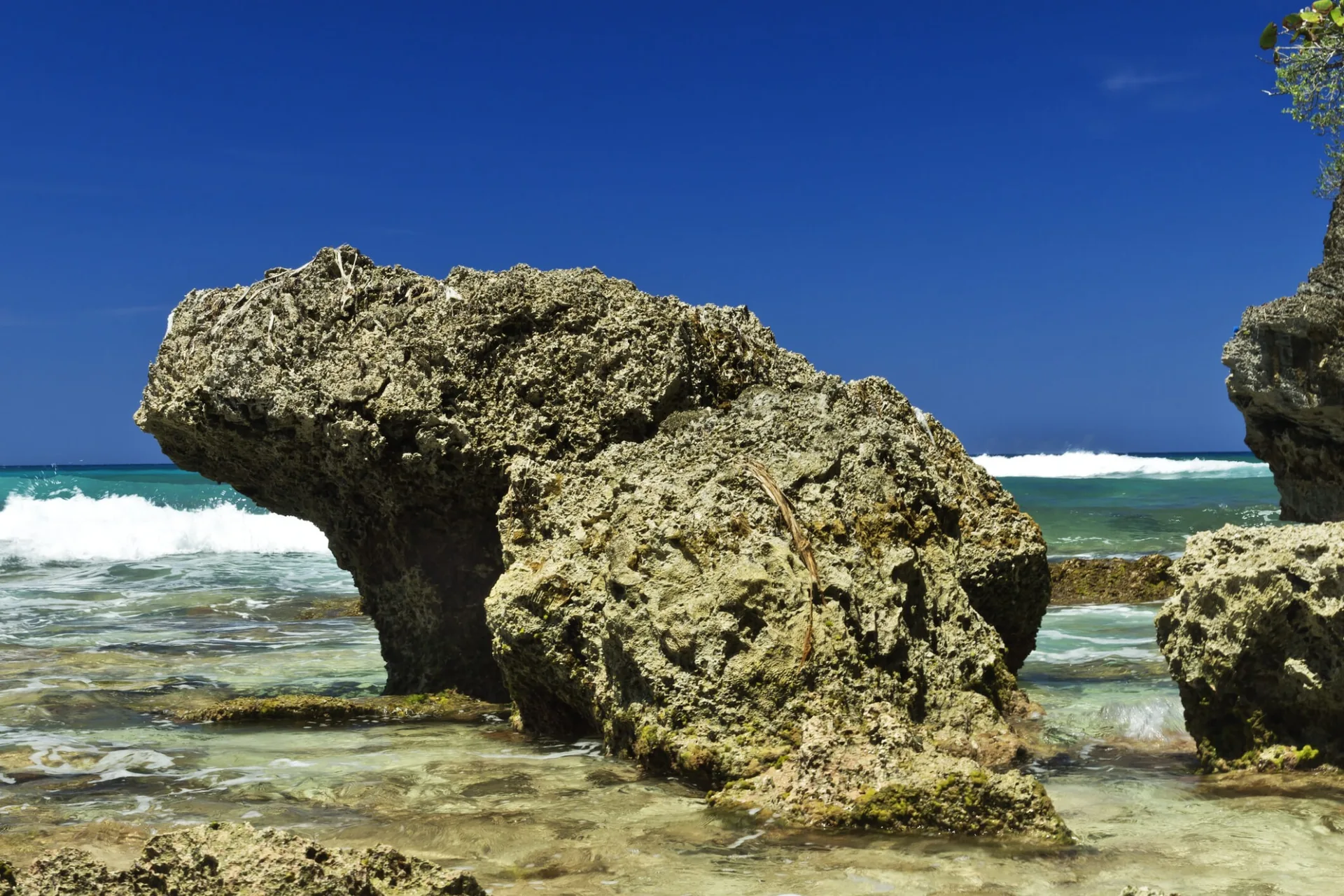
Playa Caletón lies close to Río San Juan on the north coast of the Dominican Republic, in María Trinidad Sánchez province. Unlike the exposed beaches farther along the Atlantic coastline, this cove is framed by rocky points and tropical vegetation.
The sandy area is compact rather than suited to a long-distance beach walk. The unusual rocks, changing shades of turquoise and protected setting make it a popular place to stop while exploring the coast around Río San Juan.
What is the beach like?
Caletón is generally known for clearer, calmer water than the open-ocean Playa Grande. Its small bay can be a pleasant place to spend time by the water, and some visitors snorkel near the rocky edges when the sea allows. Slippery rocks, changing depth and marine life require care.
Small local food stands or beach restaurants may offer freshly prepared fish and Dominican dishes. Hours and prices vary, and the beach can be noticeably busier on weekends or holidays. Bring some cash and don't rely on extensive resort-style facilities.
How to get to Playa Caletón
The municipal tourism office describes a road approach from Río San Juan toward Nagua, with a short access road whose surface may be uneven. You can arrive by car or arrange local transport, but check the latest road and parking conditions before leaving.
A memorable alternative is to travel by boat as part of a Laguna Gri-Grí excursion. Local boat trips follow mangrove channels and parts of the rocky coast; some include Playa Caletón as a stop. Always confirm the itinerary, time at the beach and return arrangements before booking.
Swimming, snorkeling and safety
The sheltered location often reduces the waves that reach the sand, making Caletón a more comfortable option than Playa Grande on suitable days. However, no beach is always safe. Check currents, wave action and the rocky seabed, and supervise children closely around the water.
For snorkeling, avoid stepping on corals or handling sea creatures and wear appropriate footwear around slippery rocks. If the weather is rough or water visibility is poor, enjoy the scenery from shore instead of entering the sea.
Weather and nearby experiences
Conditions on the north coast can change with rain, wind and Atlantic swell. Our weather overview is a useful starting point, but look up the current forecast for Río San Juan and ask locally about sea conditions before swimming or taking a boat trip.
For a dramatic contrast, visit Playa Grande on a separate stop to see its broad golden sand and powerful surf, without assuming it is safe to swim there. The mangroves of Laguna Gri-Grí are another highlight of Río San Juan and can be explored with a local boat operator.
Frequently asked questions
- Where is Playa Caletón?
- Near Río San Juan in María Trinidad Sánchez province on the north coast of the Dominican Republic.
- Is Playa Caletón good for families?
- It is generally more sheltered than Playa Grande, but waves, depth and slippery rocks still matter. Supervise children closely and assess conditions on arrival.
- How can I reach Playa Caletón?
- By road from Río San Juan or on certain Laguna Gri-Grí boat excursions. Check the current road condition or tour itinerary.
- Is Playa Caletón the same as Playa Grande?
- No. Caletón is a compact sheltered cove near Río San Juan; Playa Grande is a much longer, exposed Atlantic beach known for stronger surf and currents.