Activities in Santo Domingo
From the UNESCO-listed Zona Colonial with its cobblestone streets and 16th-century buildings to Los Tres Ojos, the Malecón, museums, food and nightlife — here you'll find the best activities in Santo Domingo for your trip.
Santo Domingo is far more than the capital of the Dominican Republic. The metropolis of millions on the Caribbean Sea combines centuries-old history with modern city life, Dominican culture, restaurants, music, museums and some of the most important historical buildings in the Americas.
The heart of the city is the Zona Colonial. Cobblestones, historic houses, small squares, cafés and 16th-century buildings shape the oldest quarter of Santo Domingo. Just a few kilometers away, the city looks completely different. Modern high-rises, large shopping malls, residential neighborhoods and wide avenues show today's Santo Domingo.
This contrast is exactly what makes a stay interesting. You can walk through more than 500 years of history in the morning, visit an underground lagoon in the afternoon and spend the evening with Dominican food or a walk along the Malecón.
If you're looking for activities in Santo Domingo, you'll find a mix of history, culture, nature, gastronomy and real big-city life.
Discovering the Zona Colonial
For a first visit to Santo Domingo, there's no way around the Zona Colonial.
The historic center lies on the Río Ozama and has been a UNESCO World Heritage Site since 1990. Some of the first major European buildings on the American continent were built here.
But the Zona Colonial is not a museum quarter that closes its doors after sunset. Between the historic buildings you'll find restaurants, bars, hotels, cafés, small shops and residential houses today.
It's best to allow several hours for the quarter. Many sights are close together and can be reached on foot.
It's not about ticking off every historic building. The charm also lies in walking through the side streets, discovering small courtyards and taking a break on one of the squares in between.
Walking through Parque Colón
Parque Colón is one of the central meeting points of the Zona Colonial.
The square is located directly in front of the Catedral Primada de América and is busy at almost any time of day. Around it are restaurants, historic buildings, shops and street artists.
From here you can reach many well-known sights within a few minutes.
Parque Colón is therefore a good starting point, especially for an initial orientation walk.
In the early evening the atmosphere changes. Temperatures become more pleasant, restaurants fill up and many people meet around the square.
Visiting the Catedral Primada de América
Directly at Parque Colón stands one of the most important buildings in Santo Domingo.
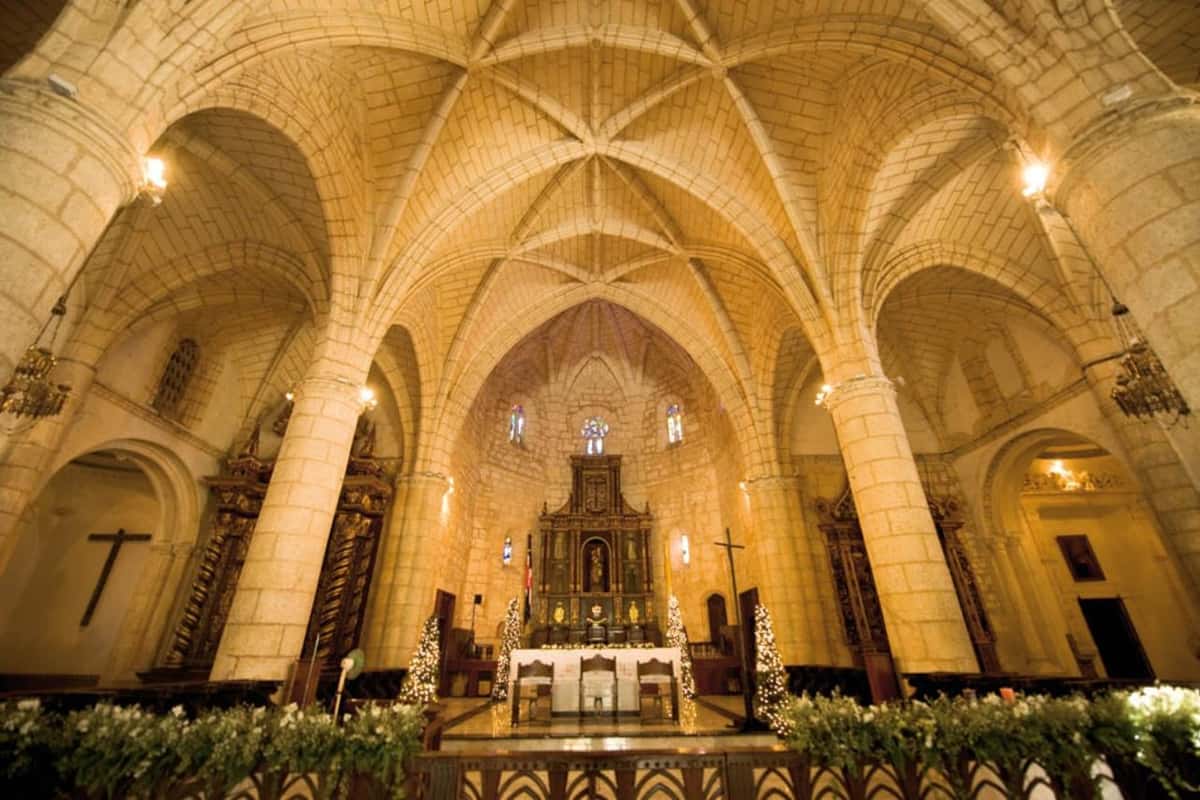
The Basílica Catedral de Santa María la Menor, usually called Catedral Primada de América, was built in the 16th century and is considered the first cathedral in the Americas.
From the outside, the massive façade of light stone is particularly striking. Inside you'll find high vaults, side chapels and historic artworks.
Even if you're usually not interested in churches, the visit is worthwhile because of the historical significance of the building.
The cathedral is one of the places where the role Santo Domingo played in the early colonial history of the Americas becomes particularly clear.
Strolling along Calle Las Damas
One of the best-known streets of the Zona Colonial is Calle Las Damas.
It is considered the first paved street in the Americas and passes numerous historic buildings.
It got its name from the ladies of the Spanish court who used to walk here during colonial times.
Today you can connect several sights along the street. These include the Fortaleza Ozama, the Panteón Nacional and various historic houses.
Calle Las Damas is one of the most beautiful streets for a quiet walk through historic Santo Domingo.
Exploring the Fortaleza Ozama
On the Río Ozama is the Fortaleza Ozama, one of the most important historic complexes in the city.
The fortress was built at the beginning of the 16th century and served to control access to the harbor and the colonial city.
From the higher areas of the complex you have a good view of the Río Ozama and parts of Santo Domingo Este on the opposite bank.
Inside the fortress you can explore various historical areas and learn more about how the city was protected during the Spanish colonial period.
Due to its location at the end of Calle Las Damas, the Fortaleza Ozama can be easily integrated into a walk through the Zona Colonial.
Visiting the Panteón Nacional
Just a few minutes' walk from the Fortaleza Ozama is the Panteón Nacional.
The building was originally built as a church in the 18th century and later converted into a national mausoleum.
Today, numerous important figures of Dominican history rest here.
Inside, the large central hall is particularly striking. An honor guard watches over the building, underlining its importance for the Dominican Republic.
The visit usually doesn't take long and can be easily combined with a walk along Calle Las Damas.
Touring the Alcázar de Colón
On the Plaza de España stands the Alcázar de Colón, one of the best-known buildings of the Zona Colonial.
The palace was built at the beginning of the 16th century for Diego Colón, the son of Christopher Columbus.
Today it houses a museum with historic furniture, artworks and objects from the colonial period.
The visit gives a good impression of how the political and social elite of Santo Domingo lived centuries ago.
The building itself is also one of the most impressive historic structures in the city.
Spending the evening at Plaza de España
Directly in front of the Alcázar de Colón is the spacious Plaza de España.
During the day, the square is a popular stop on walks through the old town. In the evening, the atmosphere changes noticeably.
The historic buildings are illuminated and the restaurants along the square fill up.
This makes Plaza de España a great place to end a day in the Zona Colonial.
During concerts, festivals and cultural events, the square is also regularly used as an event space.
Walking along Calle El Conde
Calle El Conde is one of the best-known streets in Santo Domingo.
The pedestrian zone runs across a large part of the Zona Colonial and connects Parque Colón with Parque Independencia.
Along the route are small shops, restaurants, cafés, street stalls and historic buildings.
Unlike many restored streets of the old town, El Conde appears noticeably busier and more everyday in some places.
That's exactly what makes a walk interesting. Here, tourism and normal city life meet directly.
Visiting Parque Independencia and Puerta del Conde
At the western end of Calle El Conde is Parque Independencia.
Here is the Puerta del Conde, closely linked to the independence of the Dominican Republic.
On February 27, 1844, the country's independence was proclaimed in this area.
Within the park is also the Altar de la Patria, where the remains of the three founding fathers of the Dominican Republic rest: Juan Pablo Duarte, Francisco del Rosario Sánchez and Ramón Matías Mella.
If you want to better understand the country's history, you should include this place during a walk through the old town.
Seeing the ruins of San Francisco
In the northern part of the Zona Colonial are the Ruinas de San Francisco.
The remains of the former Franciscan monastery are among the most striking historic ruins in the city.
The monastery was built at the beginning of the 16th century and was damaged several times during its history by natural events and conflicts.
Today, the massive stone walls shape the image of this part of the old town.
The surroundings are also used for cultural events and offer an interesting contrast to the more restored buildings around Parque Colón and Plaza de España.
Visiting the Museo de las Casas Reales
If you want to dive deeper into the history of Santo Domingo, you'll find several interesting museums in the Zona Colonial.
One of the most important is the Museo de las Casas Reales.
The historic buildings served as the seat of important administrative institutions during the Spanish colonial period.
Today the museum shows exhibitions on colonial history, European rule on Hispaniola and the development of Santo Domingo.
Especially after a walk through the historic streets, a museum visit helps to better contextualize many of the buildings and events.
Learning about the history of cocoa
Santo Domingo doesn't have to consist only of churches, fortresses and museums.
In the Zona Colonial there are also experiences around Dominican products and traditions.
Cocoa plays an important role. The Dominican Republic is internationally one of the well-known countries of origin for cocoa.
In the old town there are opportunities to learn more about processing, chocolate and the significance of the product for the country.
This is a nice change if you're traveling with children or want to experience something different between historic sights.
Discovering Los Tres Ojos
One of the most extraordinary natural attractions in Santo Domingo is located east of the Río Ozama.
The Parque Nacional Los Tres Ojos consists of a limestone cave system with several freshwater lagoons.
Stairs lead down into the caves. Between rock walls, tropical vegetation and clear water, a landscape emerges that hardly suggests you're in the middle of a city of millions.
The name Los Tres Ojos refers to three of the lagoons that can be reached via paths.
Another lagoon is a bit off to the side and is reached via a short ride on a small platform.
You don't need a whole day for Los Tres Ojos. The visit can be easily combined with other sights in the east of Santo Domingo.
Visiting the Faro a Colón
Not far from Los Tres Ojos is the Faro a Colón.
The monumental building was opened in 1992 and commemorates Christopher Columbus and the European arrival in the Americas.
Its enormous size is striking even from a distance.
Inside are exhibition areas with objects from different countries.
The Faro a Colón is one of the more controversial sights of the city, as the memory of colonial history is viewed much more critically today than when the monument was opened.
That's exactly why a visit can be interesting. It shows how strongly the history of Santo Domingo is still connected with questions about colonization, identity and memory.
Walking along the Malecón
The Malecón belongs to modern Santo Domingo just as the Zona Colonial belongs to the historic part of the city.
Avenida George Washington runs for kilometers along the Caribbean Sea.
Here, hotels, restaurants, residential buildings and public squares meet the coast.
The Malecón is not a classic sandy beach. Nevertheless, it is one of the most popular places to walk along the sea and experience the city atmosphere.
In the late afternoon and evening, the promenade becomes noticeably more lively.
People walk, exercise, meet friends or sit together with a view of the sea.
Experiencing a sunset on the Caribbean Sea
Santo Domingo is located directly on the Caribbean Sea, yet the city is rarely perceived as a classic beach destination.
That's exactly why an evening on the Malecón is worthwhile.
When the sun is lower, temperatures become more pleasant and the coastal road fills up.
Squares like Güibia or Plaza Juan Barón offer opportunities to get closer to the water and take a break.
If you've had a long day in the Zona Colonial, you can end the evening here much more quietly.
Walking in the Jardín Botánico Nacional
Santo Domingo can be loud, crowded and hectic.
The Jardín Botánico Nacional in the north of the city offers a strong contrast.
The extensive grounds show various plant species from the Dominican Republic and other tropical regions.
One of the best-known areas is the Japanese garden with ponds, bridges and well-kept vegetation.
The botanical garden is well suited for a quiet morning or afternoon and is also interesting for families.
If you spend several days in Santo Domingo, you'll see a completely different side of the capital here.
Visiting Parque Mirador Sur
Another green area of the city is Parque Mirador Sur.
The long park runs through the south of Santo Domingo and is mainly used by locals.
In the morning and late afternoon, many people come here to jog, cycle or walk.
The park lies above natural limestone formations and caves that are typical of the geological landscape around Santo Domingo.
If you want to see how the residents of the capital spend their free time, this is a good place away from the classic sights.
Trying Dominican food
Santo Domingo is one of the best places in the country to get to know Dominican cuisine.
In addition to traditional restaurants, you'll find modern concepts, street food, international cuisine and upscale gastronomy.
Among the best-known Dominican dishes are la bandera dominicana with rice, beans and meat, mangú made from mashed plantains, sancocho as well as mofongo and various dishes with yuca or tostones.
Fish and seafood also play an important role in many restaurants.
If you want to experience local cuisine, you shouldn't concentrate exclusively on the tourist streets of the Zona Colonial.
In different neighborhoods of Santo Domingo you'll find restaurants that are more frequented by locals.
Getting to know the modern restaurant scene
In recent years, Santo Domingo has developed into one of the most interesting gastronomic destinations in the Caribbean.
In addition to the Zona Colonial, many modern restaurants are concentrated in neighborhoods like Piantini, Naco and Ensanche Serrallés.
Here, a completely different side of the capital emerges.
Modern restaurants, cocktail bars, cafés and rooftops are in stark contrast to the historic buildings of the old town.
Especially if you stay several days, it's worth spending at least one evening outside the Zona Colonial.
Visiting Chinatown
Directly north of the Zona Colonial is the Barrio Chino of Santo Domingo.
Large Chinese gates mark the area around Avenida Duarte.
Here you'll find Chinese restaurants, supermarkets and shops. At the same time, Dominican street life and Chinese influences merge.
The neighborhood is relatively small and can be easily combined with a visit to the northern Zona Colonial.
Especially for travelers who want to get to know Santo Domingo away from the classic sights, the neighborhood is interesting.
Visiting Mercado Modelo
Near the Zona Colonial is the Mercado Modelo.
The market is known mainly for souvenirs, handicrafts and typical products from the Dominican Republic.
Here you'll find paintings, woodwork, jewelry, rum, coffee and various products related to amber and larimar.
If you want to buy souvenirs, you'll find a large selection here.
As with many tourist markets, it's worth comparing prices and checking before a purchase whether quality and price match.
Learning about larimar
Larimar is one of the best-known gemstones of the Dominican Republic.
The blue-colored stone is found worldwide only in a limited area in the southwest of the country and is available in Santo Domingo in numerous jewelry stores.
In the Zona Colonial there are also opportunities to learn more about the origin and processing of larimar.
The stone is particularly popular as a souvenir.
When buying, you should pay attention to reputable dealers, since imitations can also be offered.
Discovering Dominican rum
In addition to cocoa, coffee and larimar, rum is one of the products closely associated with the Dominican Republic.
In Santo Domingo you can taste different Dominican rums and learn more about their production.
Several providers and bars offer tastings.
If you're interested in rum, you can combine such an appointment well with an evening in the Zona Colonial.
However, rum belongs not only in tourist tastings. It is part of Dominican food and bar culture and is offered throughout the country in very different qualities and varieties.
Experiencing bachata and merengue
Music is part of everyday life in Santo Domingo.
Bachata and merengue are two of the most important musical genres of the country and can be heard on many evenings in bars, clubs and at events.
If you really want to get to know the city, you should experience Santo Domingo after sunset.
You don't have to attend a big show for that.
Often a bar with live music or a place where locals dance is enough.
Bachata in particular is one of the cultural exports of the Dominican Republic and is known all over the world today.
Experiencing the nightlife of Santo Domingo
As the capital, Santo Domingo offers significantly more nightlife than most holiday resorts in the country.
The options range from small bars in the Zona Colonial to rooftops and cocktail bars to large clubs in the modern city center.
Which area fits best depends heavily on what atmosphere you're looking for.
The Zona Colonial is well suited for an evening where restaurants, bars and historic surroundings are combined.
Piantini and Naco feel more modern and urban.
On weekends, nightlife often starts much later than many visitors from Europe are used to.
Attending a baseball game
Baseball is the most important sport in the Dominican Republic.
If you're in Santo Domingo between fall and winter, you might be lucky enough to attend a Dominican winter league game.
At Estadio Quisqueya Juan Marichal, among others, Tigres del Licey and Leones del Escogido play their home games.
A baseball evening offers a good insight into Dominican sports culture.
The atmosphere is very different from European football stadiums. Music, food and entertainment are as much a part of the experience as the game itself.
If you're in the city during the season, it's worth checking the current schedule.
Shopping in Santo Domingo
Santo Domingo is the most important shopping center in the country.
In addition to small shops and markets, there are several large shopping malls.
Ágora Mall, BlueMall, Galería 360 and Sambil are among the best-known.
For travelers, shopping malls are rarely the main reason for a visit to the capital. On very hot or rainy days, however, they can be a pleasant change.
They also show a side of modern Santo Domingo that differs greatly from the image of the Zona Colonial.
Taking a day trip to Boca Chica
If you want to fit in a classic beach day during a stay in Santo Domingo, you can go to Boca Chica.
The coastal town is located east of the capital and is known for its protected bay.
The water is relatively shallow in many parts and the offshore reefs often provide calmer conditions than open Atlantic beaches.
Boca Chica is particularly popular with locals on weekends and can get very busy then.
During the week, the atmosphere is often more relaxed.
For travelers who spend several days in Santo Domingo and want to go to the sea in between, Boca Chica is an obvious option.
Visiting Juan Dolio
A bit further east is Juan Dolio.
The town offers long beach sections, restaurants and various hotels and feels quieter than Boca Chica in many areas.
From Santo Domingo, Juan Dolio is well suited for a day trip.
If you want to combine a city break with the beach, you can also spend a few days in Santo Domingo and then continue to the coast.
Getting to know Santo Domingo on a guided city tour
If you only have a little time, a city tour can make sense.
This usually connects several of the most important sights within a few hours.
Zona Colonial, Catedral Primada de América, Alcázar de Colón, Fortaleza Ozama and Los Tres Ojos are often among the stops on such tours.
A guided tour offers an advantage especially at the historic buildings. Many details about the city's history only become clear with the right background.
If you prefer to explore on your own, you can easily explore large parts of the Zona Colonial on foot.
Santo Domingo shows a different side of the Dominican Republic
Santo Domingo can hardly be compared with the well-known holiday resorts of the country.
There is no kilometer-long hotel zone separated from the rest of life. History, everyday life, traffic, music, modern high-rises, small colmados, restaurants and centuries-old buildings are sometimes only a few streets apart.
In the Zona Colonial you can walk through some of the oldest European streets and buildings in the Americas. Shortly after, you're standing between modern high-rises or looking out from the Malecón at the Caribbean Sea.
Los Tres Ojos brings tropical nature right into the metropolitan area, and in the evening restaurants, bars and music show why Santo Domingo is also the cultural center of the country.
If you want to better understand the Dominican Republic, you should spend at least a few days in the capital.
Frequently asked questions about activities in Santo Domingo
What are the best activities in Santo Domingo?
For a first visit, the Zona Colonial, the Catedral Primada de América, the Alcázar de Colón, the Fortaleza Ozama and Calle Las Damas are among the most important historical sights.
Los Tres Ojos shows a completely different side of the city and is one of the most interesting nature experiences.
In the evening, a walk along the Malecón or a meal in the Zona Colonial is worthwhile.
If you stay several days, you can also explore the botanical garden, modern Santo Domingo and other neighborhoods.
On The Dominican Experience you'll also find selected deals for Santo Domingo.
What should you definitely see in Santo Domingo?
If you only have one day, you should concentrate mainly on the Zona Colonial.
Parque Colón, Catedral Primada de América, Calle Las Damas, Fortaleza Ozama, Plaza de España and Alcázar de Colón are relatively close together.
With a bit more time you can add Los Tres Ojos.
This way you get an impression of both the historical significance of Santo Domingo and the extraordinary nature around the city within a single day.
Can you explore the Zona Colonial on foot?
Yes. The Zona Colonial is one of the neighborhoods of Santo Domingo that can be explored very well on foot.
Many of the most important sights are only a few minutes apart.
Comfortable shoes are still sensible, as you quickly cover several kilometers during a walk and many streets are cobblestoned.
Because of the tropical temperatures, the morning and late afternoon are often more pleasant than the hottest hours of the day.
What can you do for free in Santo Domingo?
Even without tickets, there's a lot to see in Santo Domingo.
A walk through the streets of the Zona Colonial, Parque Colón, Calle El Conde, Plaza de España and parts of the Malecón costs nothing.
Parque Independencia and many public squares can also be visited freely.
Especially if you're in the city for several days, you can experience a large part of the city's feel without paying admission for sights every day.
What can you do in Santo Domingo in the rain?
Rainy days are well suited for museums and other covered sights.
The Museo de las Casas Reales, the Alcázar de Colón and various smaller museums in the Zona Colonial are good options.
Shopping malls, restaurants, cafés or a tasting can also be an alternative.
Tropical rain showers often pass quickly. So a short heavy shower doesn't mean the whole day has to be replanned.
What can you do in the evening in Santo Domingo?
In the evening, Santo Domingo changes noticeably.
In the Zona Colonial you can go out to eat, visit bars or walk through the illuminated streets around Parque Colón and Plaza de España.
The Malecón is suitable for a walk by the sea.
If you want to go out later, you'll find bars, clubs and places with live music in different parts of the city.
Santo Domingo is a city that is by no means quiet after sunset.
Is Santo Domingo suitable for families?
There are also various options with children.
Los Tres Ojos, the botanical garden and the large squares of the Zona Colonial are well suited for families.
Museums can also be interesting depending on age.
On longer city walks, you should take the heat into account and plan enough breaks.
A mix of short historical stops, nature and relaxed breaks usually works better with children than a whole day full of museums.
Is Santo Domingo safe for tourists?
As in other big cities, you should be alert in Santo Domingo.
The heavily visited areas of the Zona Colonial are regularly visited by tourists and can be explored well during the day.
Nevertheless, you shouldn't wear valuables openly unnecessarily and at night for longer distances prefer a ride service or taxi.
Santo Domingo is a large capital with very different neighborhoods. The situation can therefore change noticeably from one street to the next.
If you're unsure, it's worth following the recommendations of your accommodation or local contacts.
How many days should you plan for Santo Domingo?
For the most important sights, you should plan at least two days.
On one day you can devote yourself extensively to the Zona Colonial. On the second day you can visit Los Tres Ojos, the Malecón and other areas of the city.
With three days, the stay becomes much more relaxed.
Then there's also time for the botanical garden, modern neighborhoods, restaurants or an evening with music.
If you use Santo Domingo as a starting point for day trips, you can easily stay even longer.
When is the best time to visit Santo Domingo?
Santo Domingo can be visited all year round.
Temperatures remain warm and tropical throughout the year.
For city exploration, many travelers find the months between December and April pleasant because heat and humidity are often a bit less taxing.
A trip is also possible during the remaining months. You should then expect higher temperatures and tropical rain showers more frequently.
Since many activities in Santo Domingo take place independently of the beach, the capital is less dependent on a particular travel season than classic beach destinations.
Is Santo Domingo worth a visit?
Santo Domingo is especially worthwhile for travelers who want to see more of the Dominican Republic than beaches and resorts.
Here you get to know the country's history, see the everyday life of a Caribbean metropolis and can visit some of the most important historical buildings in the Americas.
At the same time, Santo Domingo is modern, loud, lively and partly chaotic.
That's exactly part of it.
The capital shows a side of the Dominican Republic that is hardly visible in classic holiday regions like Punta Cana.
What to do in Santo Domingo?
Santo Domingo offers the Zona Colonial, Catedral Primada de América, Fortaleza Ozama, Los Tres Ojos, the Malecón, museums, food and nightlife.
You can join a historical city tour, try local specialties or experience the nightlife. Bookable activities and tours are available on GetYourGuide for Santo Domingo.
Discover activities, sights and experiences in Santo Domingo and plan your personal Dominican Experience.
Bookable Activities:
 10% OFF
Colonial Zone Walking Tour with Tastings
More Information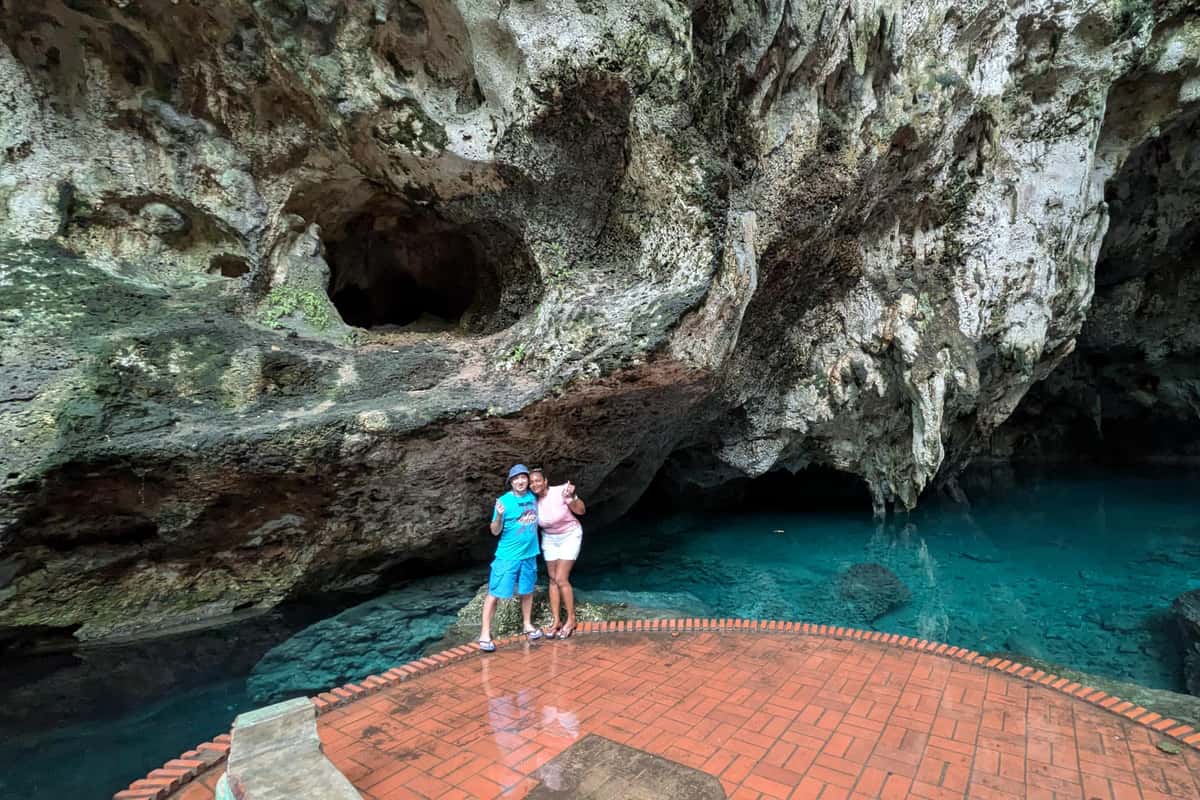
Los Tres Ojos, Boca Chica & More
More Information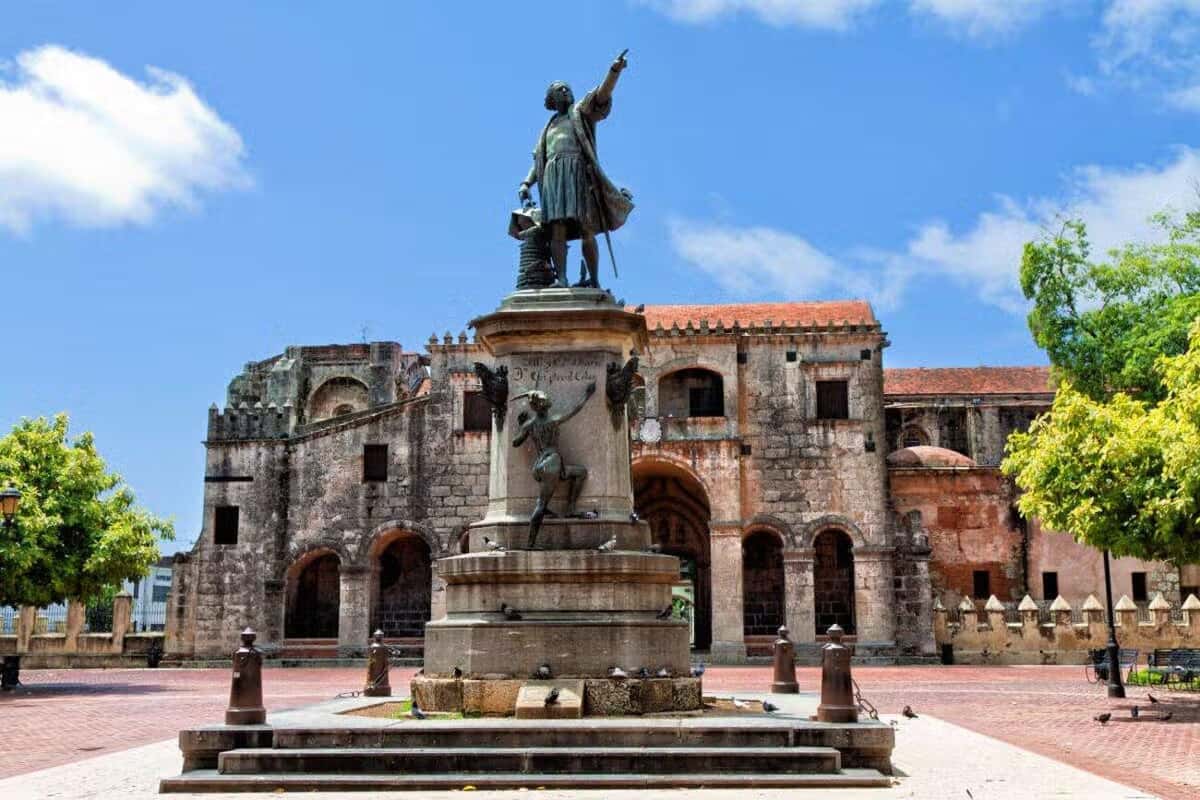
Historical Tour with Chocolate and Mamajuana
More Information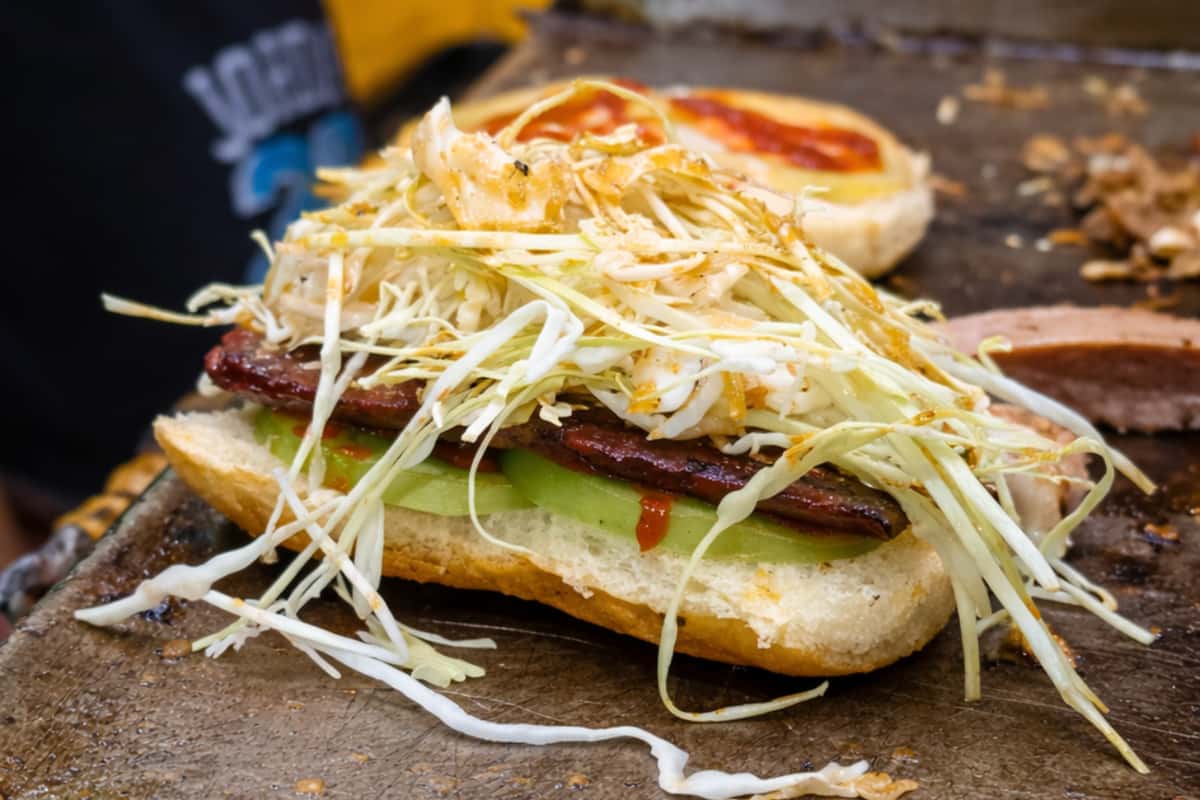 50% OFF
Sightseeing Tour with Columbus Lighthouse & Tres Ojos
More InformationReady for your next adventure?
Discover our best deals and promotions for the Dominican Republic.
Explore Deals