Activities in La Romana
From Altos de Chavón and the Río Chavón to Isla Catalina, Isla Saona, Bayahibe, the caves of Cotubanamá and the golf courses of Casa de Campo — here you'll find the best activities in La Romana for your trip.
La Romana is one of the most versatile destinations in the southeast of the Dominican Republic. The region combines Caribbean beaches, offshore islands, caves, the Río Chavón, some of the country's best-known golf courses and cultural sites such as Altos de Chavón.
At the same time, La Romana is an excellent starting point for excursions. Bayahibe is only a short drive away and is the gateway to Parque Nacional Cotubanamá and Isla Saona. Directly off the coast of La Romana lies Isla Catalina, which is particularly popular with snorkelers and divers.
If you are looking for activities in La Romana, you should therefore not only look at the city itself. Many of the most beautiful experiences are in the surrounding area and can easily be combined during a stay.
You can walk through a Mediterranean-looking stone village above the Río Chavón in the morning, take a boat to Saona the next day and spend another day between caves, coral reefs and small coastal towns.
Discover Altos de Chavón
Altos de Chavón is one of the best-known sights of La Romana.
The village, built entirely of stone, sits high above the Río Chavón and was designed in the style of a 16th-century Mediterranean town. Narrow alleys, stone arches, small squares and buildings with terracotta roofs define the picture.
Historically, however, Altos de Chavón is not a centuries-old village. The complex was created in the 20th century and opened in 1982.
This background makes the place interesting. Despite its young age, Altos de Chavón looks at first glance like a historic European village in the middle of the Caribbean.
Today it houses galleries, shops, restaurants, cultural institutions and various viewpoints.
Particularly impressive is the view down to the Río Chavón and the green landscape around the river valley.
Since Altos de Chavón is within the grounds of Casa de Campo, you should check the current access conditions before visiting. These may differ for external visitors from the rules for hotel guests and residents.
See the amphitheater of Altos de Chavón
One of the best-known buildings of Altos de Chavón is the large amphitheater.
The open-air stage was designed after the model of a Greek amphitheater and seats around 5,000 spectators.
For the opening of Altos de Chavón in 1982, Frank Sinatra performed here. Since then, numerous Dominican and international artists have appeared on the stage.
Open-air concerts remain among the special events in La Romana to this day.
If a concert takes place during your stay, it is therefore worth checking the current program.
Even outside of events, the amphitheater is one of the most striking motifs of Altos de Chavón.
Visit the Iglesia San Estanislao
In the center of Altos de Chavón stands the small Iglesia San Estanislao.
The stone church is located on one of the most beautiful squares of the complex and is particularly known as a wedding venue.
From the surroundings of the church, paths lead to viewpoints over the Río Chavón.
Especially toward the end of the afternoon, the interplay of stone architecture, tropical vegetation and river landscape is particularly impressive.
A visit to the church can be easily combined with the amphitheater and the archaeological museum.
Discover the archaeological museum of Altos de Chavón
If you are interested in the history of the Dominican Republic before the arrival of the Europeans, you should not miss the Museo Arqueológico Regional in Altos de Chavón.
The collection deals intensively with the indigenous population of Hispaniola and in particular with the culture of the Taíno.
Archaeological finds and objects are shown that convey an impression of life on the island before and during the early colonial period.
The museum is a good complement to the caves and archaeological sites in Parque Nacional Cotubanamá.
This makes it clear that the history of this region began long before the emergence of today's cities and tourist areas.
Experience the Río Chavón from the water
Below Altos de Chavón, the Río Chavón meanders through a green landscape toward the Caribbean Sea.
The steep banks and dense vegetation contrast sharply with the flat coastal landscapes that many travelers associate with the southeast of the Dominican Republic.
The river can be explored from the water on boat trips, kayak tours or other excursions.
This gives you a completely different view of the landscape than from the viewpoints in Altos de Chavón.
Due to its tropical backdrop, the Río Chavón has also been used for international film productions.
For nature lovers, a trip on the river is an interesting addition to the classic beach and island excursions of the region.
Visit Isla Catalina
Directly off the coast of La Romana lies Isla Catalina.
The small island is one of the best-known destinations for boat trips from the region and is particularly popular with snorkelers and divers.
White sand beaches and clear Caribbean water define the image of the island. Around Catalina there are several interesting underwater areas.
The best-known dive spots include The Wall and The Aquarium.
The Wall drops steeply underwater and offers experienced divers a varied underwater landscape. The Aquarium is known for corals and various fish species.
Even if you don't dive, you can snorkel on many excursions or spend a relaxed day at the beach.
Due to its proximity to the coast, Isla Catalina is particularly well suited for a day trip from La Romana.
Snorkeling around Isla Catalina
Isla Catalina is one of the best places around La Romana if you want to combine a day with snorkeling.
The coral reefs around the island provide habitat for numerous tropical fish species.
Many boat tours include a snorkeling stop before the actual beach stay.
How good the visibility is underwater depends on weather, currents and waves.
If you want to snorkel specifically, you should therefore look for a tour that allows enough time in the water and not just a short stop.
Diving on the coast of La Romana
The region is also interesting for divers.
In addition to the well-known spots around Isla Catalina, there are other reefs and dive sites along the coast.
Bayahibe in particular has developed into an important center for diving excursions in the southeast of the country.
From there, tours are offered to reefs, wrecks and various dive sites around Parque Nacional Cotubanamá.
Beginners can book a first dive with a diving school, while certified divers can choose between different spots.
Take a day trip to Isla Saona
Isla Saona is one of the best-known excursion destinations in the entire Dominican Republic.
The island is located in Parque Nacional Cotubanamá south of the coast and is known for long sand beaches, coconut palms and turquoise water.
Most Saona tours from the region start in Bayahibe.
From there, depending on the excursion, you go to the island by speedboat, catamaran or a combination of both.
Many tours stop along the way at natural sandbanks and shallow water areas.
Saona is much larger than Isla Catalina and a day trip usually takes up a large part of the day.
If you spend several days in La Romana, you should reserve at least one day for this excursion.
Experience the natural pools off Saona
A well-known part of many excursions to Isla Saona is a stop at a natural pool off the coast.
This is not an artificial basin, but a very shallow area in the middle of the sea.
The water there often reaches only to the hip or chest, depending on the spot.
Due to the light sandbank and the clear water, the intense turquoise color typical of the region is created.
Many boats make a swimming stop here before continuing to Saona or back to Bayahibe.
Discover Mano Juan on Isla Saona
If you choose a somewhat more extensive Saona tour, you can also visit Mano Juan.
The small village is the only permanently inhabited settlement on Isla Saona.
Here a different side of the island shows itself than at the classic excursion beaches.
Mano Juan consists of colorful houses, small paths and a manageable local community.
There are also sea turtle conservation projects in the surrounding area.
Not every Saona tour visits Mano Juan. If you are interested in the island beyond the large day-trip beaches, you should pay attention to this when booking.
Visit Bayahibe
Bayahibe is located east of La Romana and is one of the most important starting points for maritime activities in the region.
The former fishing village has developed into a tourist coastal destination without completely losing the character of a small town.
At the water there are restaurants, bars, small hotels and numerous boats.
From Bayahibe, most tours to Isla Saona as well as many diving and snorkeling excursions start.
But Bayahibe is also worthwhile without a boat tour.
You can walk through the town, eat by the water or watch the sunset on the coast.
Especially in the late afternoon, when many excursion boats return, the area around the harbor becomes livelier.
Relax at Playa Bayahibe
Directly at the town is Playa Bayahibe.
The beach is smaller than many of the well-known resort beaches of the Dominican Republic, but is close to the town center.
In the late afternoon you can easily combine a walk through Bayahibe with a stay at the sea.
Restaurants and bars are also in the area.
If you are planning a complete beach day, Playa Dominicus a few kilometers further offers another option.
Discover Playa Dominicus
Southeast of Bayahibe is Playa Dominicus.
The long beach is known for light sand and clear, turquoise water.
A large part of the coast is lined with resorts, but there are also public accesses.
Playa Dominicus is suitable for swimming, relaxing and, depending on conditions, also for snorkeling.
Particularly striking is the black and white painted lighthouse on the beach, which has become one of the best-known photo motifs of Dominicus.
If you stay in La Romana and want to spend a classic beach day, you will find one of the best-known options in the area here.
Explore Parque Nacional Cotubanamá
Behind Bayahibe and Dominicus begins Parque Nacional Cotubanamá.
The protected area is one of the most important nature regions in the southeast of the Dominican Republic and encompasses forests, caves, coastal areas and Isla Saona.
Previously, the park was known as Parque Nacional del Este.
Today it bears the name Cotubanamá, in memory of a Taíno cacique who resisted Spanish colonization at the beginning of the 16th century.
If you only experience the region from the beach, you therefore only see a small part of its landscape.
The national park contains various paths and caves that offer a view of the nature and indigenous history of the area.
Visit the Cueva del Chicho
One of the most extraordinary places in Parque Nacional Cotubanamá is the Cueva del Chicho.
The cave is located in the forest and contains an intensely blue freshwater pool.
After the path through the tropical vegetation, the transition into the dark limestone cave is particularly impressive.
On the walls there are also indications of the former presence of the Taíno.
The clear water invites you to swim.
For certified cave divers there are also special diving opportunities, which should only be carried out with appropriately qualified providers.
Hike the Padre Nuestro Trail
The Sendero Padre Nuestro also leads through Parque Nacional Cotubanamá.
The ecological and archaeological trail runs through tropical dry forest and passes various caves and natural formations.
Along the way you can discover plant species of the region and at the same time learn more about the former use of this area.
The trail offers a strong contrast to a classic beach day.
If you spend several days in La Romana or Bayahibe and like to be on foot, you can spend half a day away from the coast.
Visit the Cueva de las Maravillas
West of La Romana, on the way toward San Pedro de Macorís, is the Cueva de las Maravillas.
The large cave system is one of the best-known accessible caves in the Dominican Republic.
Inside you will find stalactites, stalagmites and numerous well-preserved pictograms and petroglyphs of the Taíno.
The tour has been developed with paths, lighting and ramps, making it much more accessible than many other caves in the country.
Especially on very hot days, the visit is pleasant, as the temperature inside is noticeably cooler than outside.
The Cueva de las Maravillas can be easily combined with a drive between Santo Domingo and La Romana, but is also suitable as its own half-day excursion.
Discover Casa de Campo and its surroundings
Casa de Campo is closely linked to the development of La Romana as an international travel destination.
The large resort grounds include hotels, villas, sports facilities, restaurants, a marina, golf courses and Altos de Chavón.
If you stay there overnight, you will find numerous activities directly on the grounds.
Different access rules sometimes apply to external visitors. Especially for Altos de Chavón, the marina or restaurants within the resort, you should therefore check in advance whether and under what conditions a visit is possible.
Play golf in La Romana
La Romana is one of the best-known golf regions in the Caribbean.
Casa de Campo in particular has helped make the region internationally known among golfers.
The best-known course is Teeth of the Dog, designed by Pete Dye, with several spectacular holes right along the Caribbean Sea.
After a comprehensive restoration, the course reopened to players at the end of 2025.
In addition, Dye Fore is another well-known golf course that runs partly high above the Río Chavón.
Even if you travel to La Romana mainly for golf, you can combine sport with beach, Altos de Chavón and boat trips.
See the Marina of Casa de Campo
The Marina of Casa de Campo is located where the Río Chavón meets the Caribbean Sea.
Yachts, restaurants, cafés and shops shape the area.
For resort guests, the marina is one of the central places for a walk or an evening by the water.
Various maritime activities also start from here.
Since the marina is within the private grounds of Casa de Campo, external visitors should check the current access conditions in advance.
Try sport fishing
The waters off La Romana are also known for sport fishing.
Depending on the season and conditions, various deep-sea fishing tours are offered.
The Marina of Casa de Campo is one of the starting points for such trips.
If you travel specifically for certain fish species, you should inform yourself about the respective season beforehand.
Sport fishing is a much more specialized activity than a classic boat trip, but has been part of the tourist offering of the region for many years.
Sail across the Caribbean Sea by catamaran
Catamaran excursions are among the most popular activities around La Romana and Bayahibe.
Many tours go to Saona or Catalina and combine the crossing with swimming, snorkeling and a stay at the beach.
The return trip in the afternoon can be very relaxed in good weather.
If you prefer a quieter tour, you should pay attention to group size and route. There are clear differences between large excursion boats and smaller private offerings.
Get to know the city of La Romana
With all the well-known excursion destinations, the actual city of La Romana is often overlooked.
It is much less oriented toward visitors than Altos de Chavón or Bayahibe and therefore conveys a different impression.
La Romana developed strongly in the 20th century through the sugar industry. The history of Central Romana and the processing of sugar cane is still closely linked to the economic development of the city.
If you don't just want to see tourist facilities, you can take some time for the center.
Here you experience more of the everyday life of a Dominican city.
Visit Parque Duarte and Santa Rosa de Lima
In the center of La Romana is Parque Juan Pablo Duarte.
The city park is a meeting place for residents and is suitable for a short break during a walk.
Directly in the vicinity is the Iglesia Santa Rosa de Lima.
The history of the Catholic community dates back to the early 20th century. The current church building was consecrated in 1940 and is one of the historical landmarks of the city.
The visit can be easily combined with a short walk through the center.
If you only have a few days in the region, however, you should not plan a complete vacation day for it.
Visit Playa Caleta
South of the city center is Playa Caleta.
The beach is used more by locals than many of the well-known tourist beaches around Bayahibe and Dominicus.
Around the coast there are smaller restaurants and opportunities to eat fish and local dishes.
Playa Caleta is not necessarily the classic postcard beach that many vacationers travel to the Dominican Republic for.
For that very reason, the place can be interesting if you also want to see something of everyday life in La Romana.
Try Dominican food in La Romana
Culinary-wise, it is also worth leaving the resorts at least occasionally.
In La Romana you will find Dominican restaurants, small cafeterías and local eateries.
Rice, beans, meat, tostones, yuca, mangú and sancocho are among the well-known classics of Dominican cuisine.
Due to the location by the sea, fish and seafood also play an important role.
Bayahibe is particularly well suited for a meal right on the coast.
If, on the other hand, you want to experience more local city life, you will find numerous less touristy options in La Romana itself.
Experience the sunset in Bayahibe
The location on the southeastern coast makes Bayahibe a particularly beautiful place for the early evening.
After the last excursion boats return, the area around the coast becomes quieter.
Restaurants and bars fill up and the sun sinks over the sea.
An evening in Bayahibe is therefore well suited after a day in the national park or at the beach.
If you usually stay overnight within a resort, you should at least once stay in town until sunset.
Experience the nightlife around La Romana and Bayahibe
The nightlife in the region is spread across different areas.
In La Romana itself you will find local bars, clubs and restaurants.
Bayahibe and Dominicus are more oriented toward travelers and offer a selection of bars and establishments near the beach.
Within Casa de Campo there are in turn restaurants and entertainment in a much more exclusive setting.
The right area therefore depends largely on what atmosphere you are looking for.
La Romana combines Caribbean, nature and culture
La Romana is often associated with Casa de Campo or Isla Saona, but the region offers much more.
Above the Río Chavón lies Altos de Chavón, one of the best-known cultural sites in the country. Off the coast, Isla Catalina awaits with coral reefs and clear water. A few kilometers to the east, Parque Nacional Cotubanamá begins around Bayahibe with caves, hiking trails and access to Isla Saona.
In between are beaches, small coastal towns and the city of La Romana itself.
This diversity is exactly what makes the region interesting.
You can spend a day with history and culture, take a boat out onto the Caribbean Sea the next morning and spend another day walking through a cave or a national park.
If you want to experience the Dominican Republic beyond the hotel beach, you will find more than enough options for several varied days around La Romana.
Frequently asked questions about activities in La Romana
What to do in La Romana?
If you are wondering what to do in La Romana, for a first visit you should plan Altos de Chavón, a boat trip to Isla Catalina or Isla Saona and a visit to Bayahibe.
Altos de Chavón combines culture and views of the Río Chavón. Isla Catalina is particularly suitable for snorkeling and diving, while Saona is interesting for a complete day trip with beach and Caribbean scenery.
If you want to combine nature and history, Parque Nacional Cotubanamá, Cueva del Chicho or Cueva de las Maravillas are good options.
With more time you can discover the city of La Romana itself, Playa Dominicus or the Río Chavón.
Golfers will also find some of the best-known golf courses in the Dominican Republic around Casa de Campo.
You can find bookable activities and tours at GetYourGuide for La Romana.
What should you definitely see in La Romana?
If you only have a little time, Altos de Chavón is one of the best-known sights of the region.
A second focus should be on the coast.
Depending on your interest, you can choose an excursion to Catalina or Saona.
If you prefer nature and history, you can visit one of the caves instead.
This way you get an impression within a short time of how diverse La Romana and its surroundings are.
What can you do in La Romana in one day?
If you only have one day, you should concentrate on two areas.
One option is to visit Altos de Chavón in the morning and then Bayahibe or Playa Dominicus.
Another option is a complete boat trip to Isla Catalina or Isla Saona.
Trying to combine both in one day would make the stay unnecessarily full.
Saona in particular deserves a whole day.
What can you do in La Romana without a booked excursion?
Even without an organized tour there are various options.
You can visit the center of La Romana, go to Bayahibe or spend a beach day in Dominicus.
With a rental car, the Cueva de las Maravillas and other places in the area are also easily accessible.
For boat trips to Saona or Catalina, however, you need a corresponding boat connection or tour.
For caves in the national park and activities on the Río Chavón, a local guide can also be useful.
Which island is better, Saona or Catalina?
That depends on what you are looking for.
Saona is larger and known above all for its long palm beaches, sandbanks and classic Caribbean landscapes. The excursion is usually more focused on beach, boat trip and swimming.
Catalina is closer to La Romana and particularly interesting for snorkelers and divers.
Those looking for the classic postcard excursion usually choose Saona.
Those who want to spend more time in the water and at coral reefs may prefer Catalina.
If you stay in La Romana for several days, you can of course visit both islands.
Is La Romana or Punta Cana better?
La Romana and Punta Cana appeal to partially different travelers.
Punta Cana offers a much larger selection of resorts and a very pronounced tourist infrastructure along long beaches.
La Romana feels more compact and offers very different destinations within relatively short distances with Altos de Chavón, Río Chavón, Catalina, Bayahibe and Cotubanamá.
For golfers, divers and travelers who undertake several day trips, La Romana is particularly interesting.
If, on the other hand, you are mainly looking for a classic resort vacation on long sand beaches, you will find more choice in Punta Cana.
Is La Romana or Bayahibe better?
Here too it depends on the type of your trip.
La Romana is a larger city and is particularly suitable as a starting point for Altos de Chavón, Catalina and Casa de Campo.
Bayahibe is smaller and right on the sea. For Saona tours, diving, snorkeling and a stay with a stronger coastal character, the town is particularly practical.
Many travelers speak of a vacation in La Romana, although their hotel is actually in Bayahibe or Dominicus.
For travel planning, it is therefore worth checking the exact location of the accommodation.
Can you go from La Romana to Isla Saona?
Yes. Isla Saona is one of the most important excursion destinations for visitors to the La Romana region.
However, most boats do not depart directly from the city center of La Romana, but start in Bayahibe.
From La Romana, you first go overland to Bayahibe and from there by boat to Saona.
This geographical distinction is particularly important when booking tours and transfers.
Can you go from La Romana to Isla Catalina?
Yes. Isla Catalina lies directly off the coast of La Romana and is one of the closest destinations for a boat trip.
Various tours combine the island with snorkeling or diving stops.
This makes Catalina also well suited for travelers who do not want to spend the whole day on the longer trip to Saona.
What can you do during a cruise stop in La Romana?
La Romana is regularly called on by cruise ships.
During a limited stay, Altos de Chavón, the Río Chavón and Isla Catalina are among the nearby excursion destinations.
Bayahibe can also be visited depending on the lay time.
If you are planning an individual excursion, you should pay particular attention to the return time to the ship and allow sufficient buffer.
Saona can also be possible, but due to the longer duration it is more dependent on the specific port times.
What can you do in La Romana in the rain?
In the rain, the Cueva de las Maravillas is particularly suitable.
Large parts of the visit take place underground and the cave at the same time conveys an impression of the nature and history of the region.
The archaeological museum in Altos de Chavón can also be an alternative, provided access to the grounds is possible.
In heavy rain, wind or thunderstorms, you should coordinate boat trips and water sports activities with the respective provider.
Short tropical showers, on the other hand, do not automatically mean that the entire day is lost.
Is La Romana suitable for families?
Yes. The region offers various activities that are also suitable for families.
Beach days in Bayahibe or Dominicus, Isla Catalina and the well-developed Cueva de las Maravillas are options depending on the age of the children.
Altos de Chavón can also be explored without major physical exertion.
For longer boat trips, hikes in the national park or snorkeling activities, the age and swimming ability of the children should be taken into account.
How many days should you plan for La Romana?
Three to four days are a good basis for the most important activities.
One day can be dedicated to Altos de Chavón and the Río Chavón.
You should reserve a complete day for Isla Saona.
Another day can be used for Catalina, Bayahibe, Dominicus or a cave tour.
With five to seven days, the stay becomes much more relaxed and you can combine beach days with excursions.
If you stay overnight in a resort around La Romana or Bayahibe, you can spread the activities over a complete vacation week.
When is the best time to visit La Romana?
La Romana can be visited all year round.
Temperatures remain tropically warm and the Caribbean Sea is suitable for beach and water sports throughout the year.
The months from December to April are among the most popular travel times and fall in a tendentially drier phase.
Outside these months, a stay is also quite possible. Then tropical showers can occur more frequently.
For boat trips, the current wind and sea conditions are more important than a blanket monthly figure.
Is La Romana worth a trip?
La Romana is particularly worthwhile for travelers who want to experience different things during their vacation.
The region combines beaches and Caribbean Sea with culture, caves, river landscapes and several of the best-known excursion destinations in the country.
Altos de Chavón is only a few kilometers from the city. Catalina is directly off the coast. Bayahibe leads further toward Cotubanamá and is at the same time the starting point for Saona.
This makes it possible to combine very different experiences within a few days.
La Romana itself is also a real Dominican city and not a tourist area built exclusively for visitors.
Discover activities, excursions and experiences in La Romana and plan your personal Dominican Experience.
Bookable Activities:
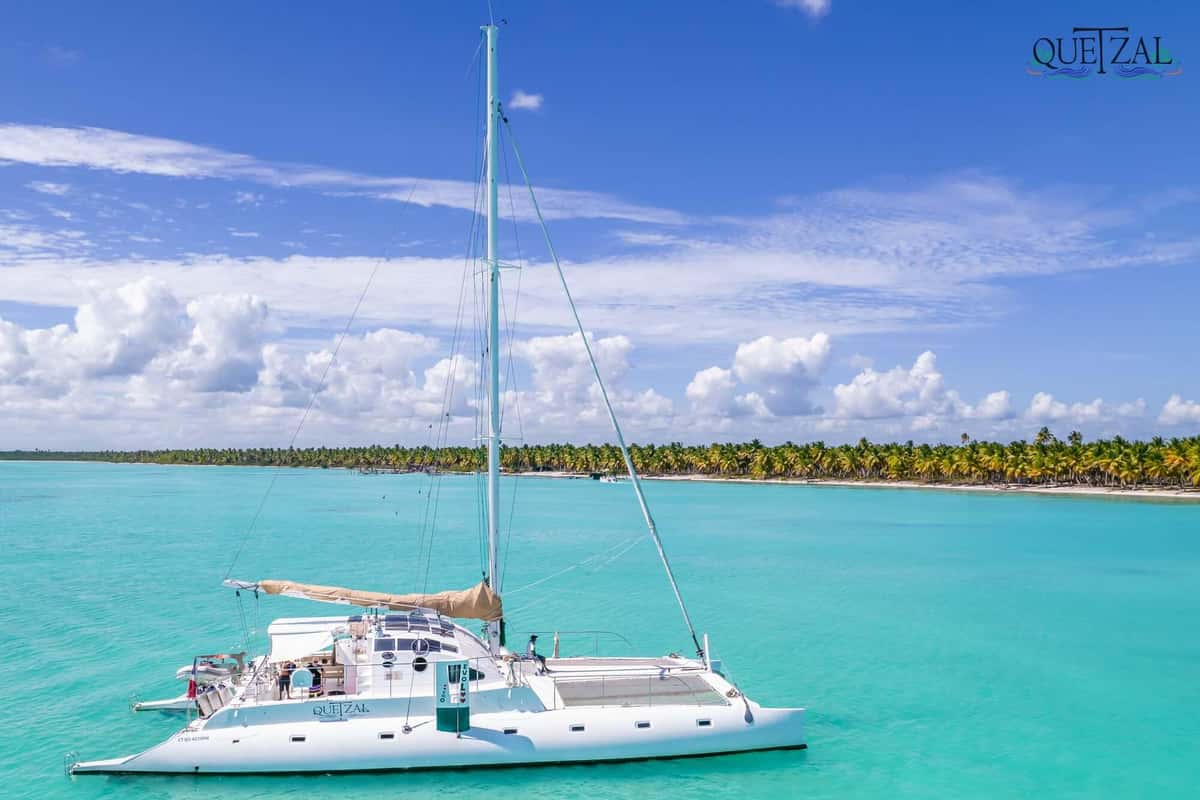
Saona Island Luxury Catamaran Tour
More Information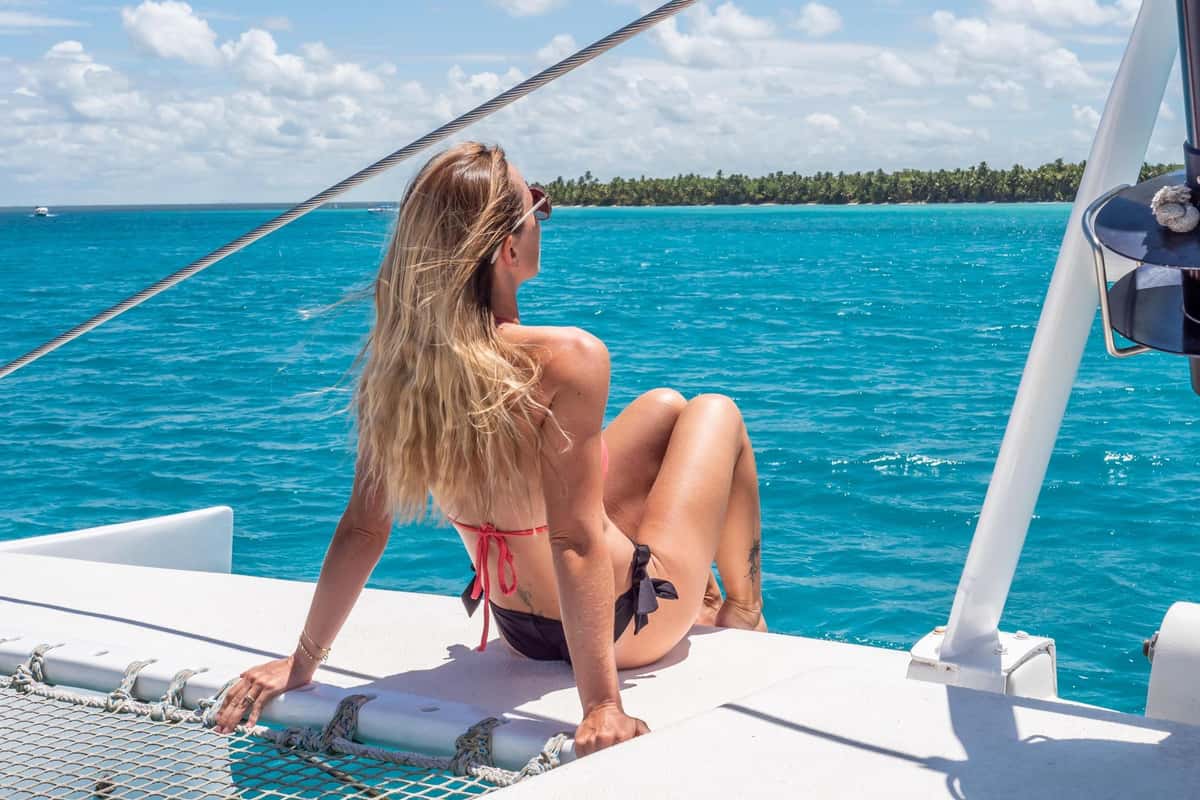
Catalina Island Snorkeling Tour
More Information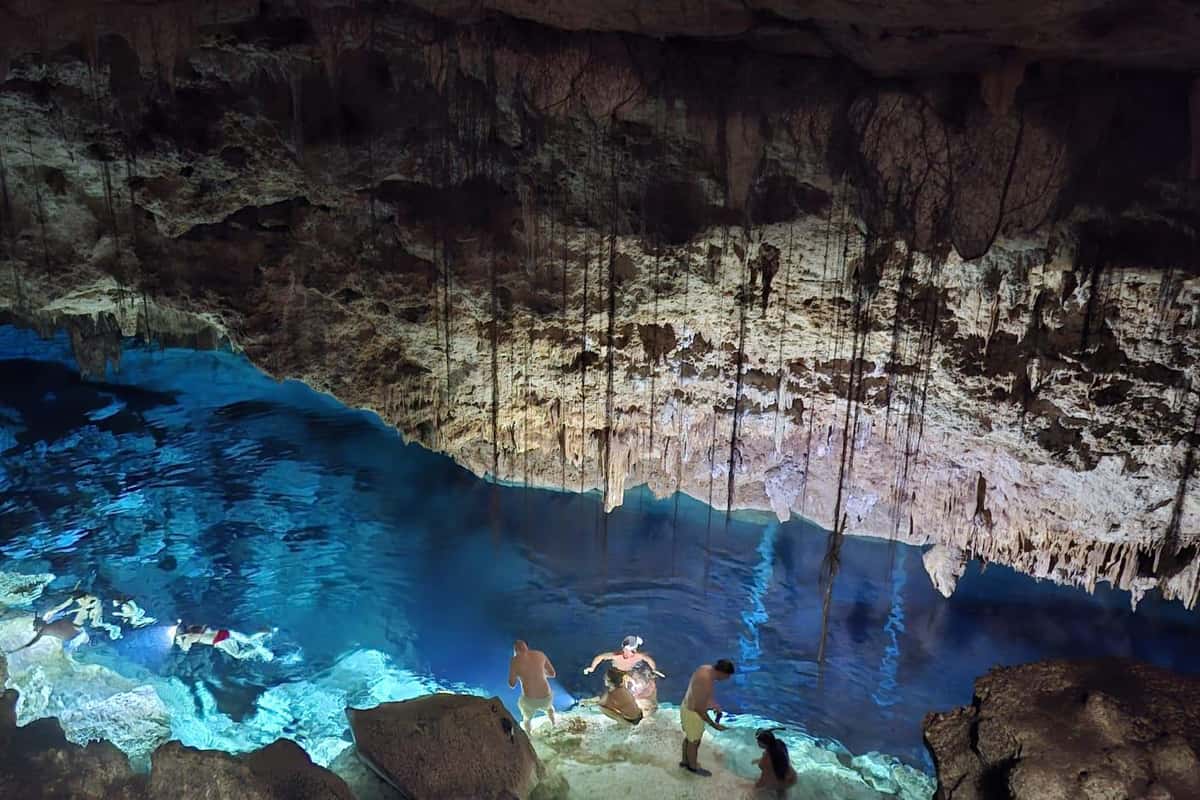
National Park Jungle Walk & Snorkeling
More Information
Dominican Life & Flavors from Bayahibe
More InformationReady for your next adventure?
Discover our best deals and promotions for the Dominican Republic.
Explore Deals